
Last Updated: October 23, 2026
Quick Summary
To prepare garden borders for winter, clear spent annuals and weeds in early autumn, then mulch with a 5-8cm layer of organic matter once the ground has cooled but before it freezes. Leave seed heads and hollow stems standing for wildlife, and protect tender plants with fleece once frost is forecast.
- Start winter border prep from late September to early November, before the first hard frosts.
- Leave sunflower heads, teasels and hollow stems standing to shelter insects and feed birds.
- Spread compost or well-rotted bark to a 5-8cm depth, keeping it clear of stems and crowns.
- Never mulch or dig heavy, waterlogged ground, as compaction can take years to undo.
- Wait until the first frost is forecast before wrapping plants in horticultural fleece.
Table of Contents
- When to Start Preparing Garden Borders for Winter
- What to Cut Back in the Garden in Autumn
- Should You Clear Leaves from Garden Borders?
- How to Mulch Flower Beds for Winter
- How to Protect Plants from Frost
- Preparing Perennial Borders for Winter
- Common Mistakes to Avoid in Winter Border Preparation
- Conclusion
- Frequently Asked Questions
When to Start Preparing Garden Borders for Winter
The best time to start preparing garden borders for winter is mid-autumn, once flowering has finished and the soil is still warm but no longer baking. In practice, that means working through your borders from late September to early November, before the first hard frosts settle in.
Timing matters more than most guides admit. Cut back too early and you expose fresh growth to cold snaps. Leave it too late and you end up tidying frozen ground in the rain, which is miserable and does the soil no favours.
We plan winter border prep in two passes:
- Early autumn: clear spent annuals, weed, and trim back tired foliage
- Mid to late autumn: mulch, protect tender plants, and tidy perennials
The Royal Horticultural Society’s autumn garden guidance is a sensible reference point for what to tackle when. Work with the weather you actually get, not the calendar alone.
What to Cut Back in the Garden in Autumn
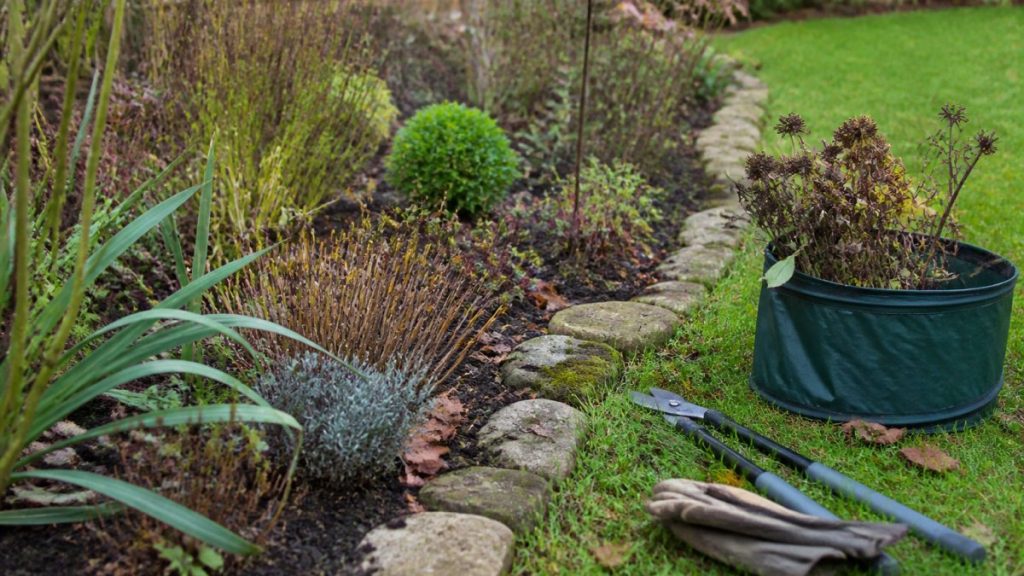
Cut back anything that has finished flowering and gone brown, but leave seed heads and stems that feed wildlife. That single rule covers most of what you need to know.
Here is what to cut back and what to leave:
- Cut back: spent annuals, faded perennials like hardy geraniums, and any diseased foliage
- Leave: sunflower heads, teasels, and hollow stems that shelter insects
- Trim lightly: shrubs that have outgrown their space, but avoid hard pruning before frost
A common mistake is stripping everything to bare soil. It looks tidy for a week, then leaves birds and insects with nothing to eat through winter. Our approach is to cut back the messy growth and keep the useful structure.
Should You Clear Leaves from Garden Borders?
No, you should not clear every leaf from garden borders. A thin layer of fallen leaves is free mulch and free habitat. Clear them from paths, lawns, and ponds, but let a light scattering stay on the borders.
The trick is balance. Thick, smothering drifts can suffocate small plants and trap damp, so thin them out. A few centimetres is plenty.
- Sweep heavy leaf cover off low-growing plants
- Leave leaves around shrubs and trees as natural insulation
- Avoid leaving wet leaves on evergreens, which can cause rot
If you want the tidiest result without losing the benefit, rake leaves into a pile, shred them, and return a light layer to the border.
How to Mulch Flower Beds for Winter
Mulching flower beds for winter means spreading a 5-8cm layer of organic matter over the soil surface, around plants, to insulate roots and lock in moisture. Do it after the ground has cooled but before it freezes.
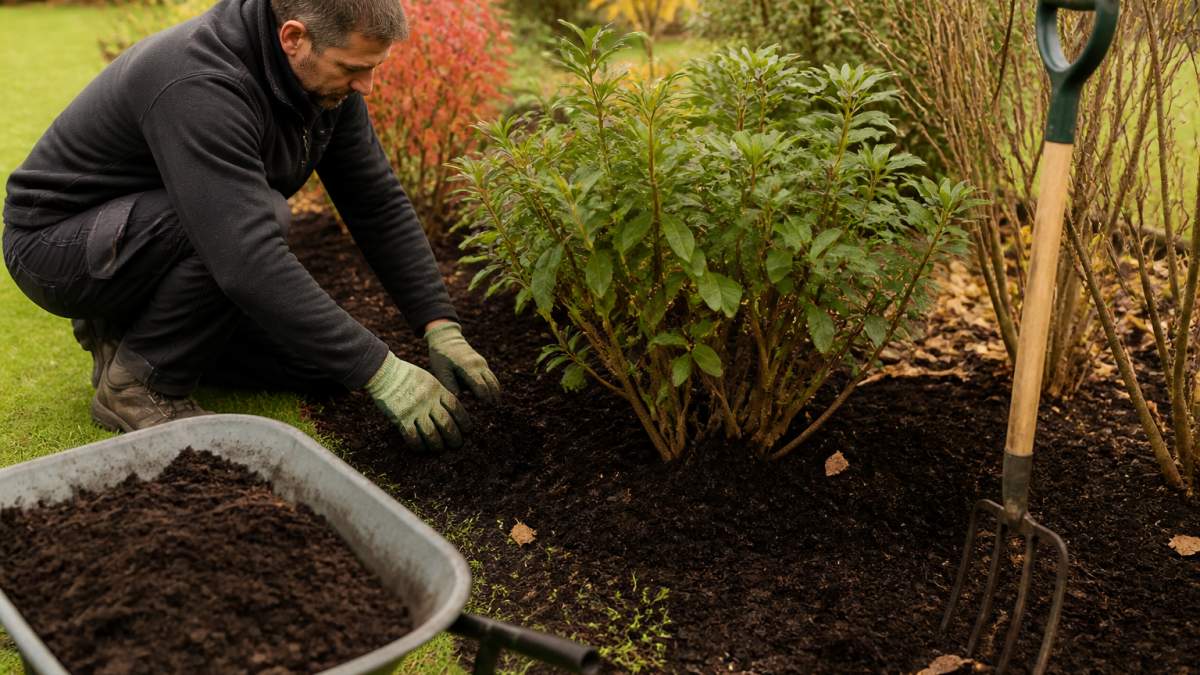
Here is how to mulch a border properly:
- Clear weeds and debris first, so you are not burying problems
- Water if the soil is dry, as mulch holds moisture in
- Spread compost or well-rotted bark to a 5-8cm depth
- Keep mulch clear of stems and crowns to prevent rot
- Feather the edges so it looks natural, not like a pile
Do not mulch frozen or waterlogged ground. It seals in cold and damp, and plants suffer for it. Wait for a dry, mild spell.
How to Protect Plants from Frost
Protecting plants from frost comes down to three things: shelter, insulation, and timing. Move tender pots to a sheltered spot, wrap vulnerable crowns, and hold off protection until the first frost is forecast.
Frost damage hits new growth and tender leaves hardest. A few simple steps go a long way:
- Move terracotta and tender pots against a wall or into a greenhouse
- Wrap half-hardy plants in horticultural fleece
- Lift and store dahlias and similar tender tubers
- Avoid cutting back stems you plan to leave for insulation
According to the Met Office’s guidance on frost and cold weather, frost can strike well before the deepest winter, so keep fleece handy from October onwards. Do not wrap too early, or you trap warmth and encourage soft growth.
Preparing Perennial Borders for Winter
Preparing perennial borders for winter is mostly about cutting back the messy growth, dividing overcrowded clumps, and leaving the right structure for wildlife. Perennials reward a little effort now with stronger growth next spring.
A checklist for a perennial border:
- Cut back spent foliage but leave seed heads for birds
- Divide congested clumps and replant the healthy outer sections
- Remove diseased leaves rather than composting them
- Check plant labels and move tender perennials to shelter
- Top up mulch around, not over, the crowns
What most guides miss is that a little untidiness is good. Stems left standing shelter insects and add structure on frosty mornings. We aim for a border that looks cared for, not scrubbed bare.
Common Mistakes to Avoid in Winter Border Preparation
The biggest winter border mistake is doing too much, too early, and leaving plants exposed to the cold. Over-tidying removes the natural protection plants need.
Watch out for these:
- Cutting back everything, which strips wildlife of food and shelter
- Mulching over plant crowns, which causes rot
- Walking on wet soil, which compacts it and damages structure (Clay soils)
- Wrapping plants too early, which encourages soft, vulnerable growth
- Forgetting to water evergreens in dry spells, even in winter
Never mulch or dig heavy, waterlogged soil. Compaction from working wet ground can take years to undo, and it harms the roots you are trying to protect.
A steady, staged approach beats a single frantic weekend. That is how we handle borders across Oxfordshire for clients who want a garden that looks good and supports local wildlife.
Most winter border problems come from doing too much, too early, so here are the mistakes to watch for and how to put them right.
| Problem | Cause | Fix |
|---|---|---|
| Wildlife left without food and shelter | Cutting back everything | Leave seed heads and hollow stems standing |
| Rot around plants | Mulching over plant crowns | Keep mulch clear of stems and crowns |
| Compacted, damaged soil | Walking on wet soil | Stay off wet ground |
| Soft, vulnerable growth | Wrapping plants too early | Wait until the first frost is forecast |
| Evergreens suffering in dry spells | Forgetting to water in winter | Water evergreens in dry spells |
| Years of compaction | Mulching or digging waterlogged soil | Never work heavy, waterlogged ground |
Conclusion
Winter border prep is not about stripping everything bare. It is about clearing what needs clearing, protecting what needs protecting, and leaving enough structure for the wildlife that shares your garden. Get the timing right and the rest falls into place.
If the thought of all this feels like one job too many, TLC Gardening can take it off your hands. As a family-run team, we offer regular slots or one-off seasonal visits, timed with local wildlife in mind, and we specialise in pollinator-friendly planting that keeps borders looking cared for. Get a quote from TLC Gardening and head into winter with a garden that is ready for spring.
Frequently Asked Questions
When should you prepare garden borders for winter?
Start in mid to late autumn, once flowering has finished and the soil is still workable but temperatures are dropping. October and November suit most borders. Clear debris and cut back spent growth first, then mulch before the first hard frost. If you garden on heavy clay, mulch earlier while the ground is dry enough to work without compacting it. Leaving everything until December risks frozen soil and tender plants damaged before you have protected them.
Should you clear leaves from garden borders in autumn?
Clear thick, smothering layers from small plants and alpines, but leave a light scattering where it does no harm. Fallen leaves provide habitat for overwintering insects and hedgehogs, and they rot down into valuable organic matter. Rake heavy deposits off lawns and low-growing plants, then move them to a leaf bin or pile. Keep leaves away from the crowns of tender perennials, where damp can cause rot over winter.
Which plants should be left standing over winter?
Leave seed heads on teasels, echinacea, sedum, and ornamental grasses standing until spring. They feed birds, shelter insects, and add structure when little else is in flower. Hollow stems of plants like hydrangea and fennel make good overwintering sites for beneficial insects. Cut these back in late February or March once new growth appears. Only cut back plants that are diseased or that collapse and smother neighbours.
Can you move or divide plants before winter?
Autumn suits dividing and moving most herbaceous perennials while the soil is still warm. Lift clumps, split them with two forks, and replant with the crown at the same level. Water in well and mulch to insulate roots. Avoid this for tender plants and anything borderline hardy, which are better moved in spring. Leave newly divided plants undisturbed until they establish, and do not divide in waterlogged ground.
