
Table of Contents
- Why Clay Soil Is So Common in Oxfordshire Gardens
- How to Improve Drainage in Heavy Clay Soil
- When to Dig Clay Soil (and When to Leave It Alone)
- How to Improve Clay Soil Without Digging
- The Best Compost for Clay Soil
- How Long It Takes to Improve Clay Soil
- Conclusion
- Frequently Asked Questions
Last Updated: 19 October 2026
Why Clay Soil Is So Common in Oxfordshire Gardens
Clay soil is heavy, sticky and slow to drain, and it dominates most gardens across the county. If you have ever tried to dig a border in spring and found your fork stuck fast, you already know the problem.
The reason is geological. Much of the region sits on clay-heavy deposits laid down over ancient riverbeds and lowland basins. These soils hold water tightly and warm up slowly in spring.
That is not all bad news. Clay is packed with nutrients and holds moisture through dry spells. The trick is learning how to improve clay soil in Oxfordshire gardens without fighting it.
At TLC Gardening, we work with these soils every week. Below, we explain what actually works, what wastes your time, and how long the job really takes.
How to Improve Drainage in Heavy Clay Soil
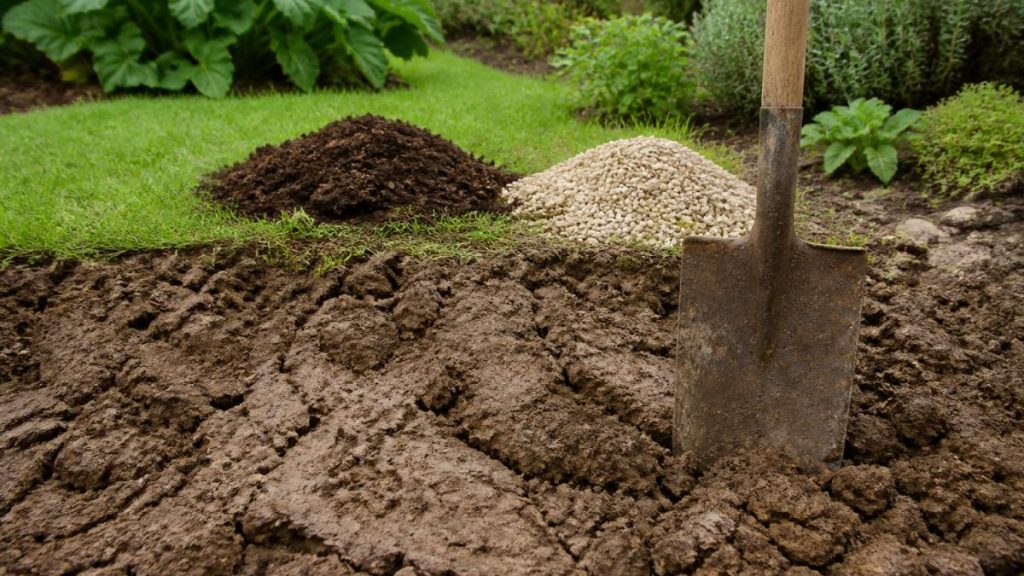
Drainage improves when you open up the soil structure, not when you try to change its basic nature. Clay particles are tiny and flat, so they pack together and trap water. You need to create gaps for that water to move through.
Why Adding Sand Usually Makes Things Worse
The most common mistake is digging in builder’s sand. On its own, sand mixed into clay creates something closer to concrete. The particles bind together and set hard.
Only very sharp grit in large quantities helps, and even then it works best on the surface. For most gardens, organic matter is the safer route.
Simple Drainage Fixes That Work
- Spread a 5-8cm layer of horticultural grit or compost on the surface
- Fork over the top 10cm to mix it in lightly
- Add raised beds for anything that hates wet roots
- Plant thirsty shrubs such as dogwood to draw water out
- Check for compacted patches and aerate them with a fork
Never work clay soil when it is wet. Digging or walking on saturated clay squeezes out the air pockets and leaves you with a compacted slab that takes years to repair.
When to Dig Clay Soil (and When to Leave It Alone)
Dig clay in autumn or early spring, when the soil is moist but not sticky. Pick up a handful and squeeze it. If it crumbles, you can work it. If it smears into a shiny ball, wait.
Autumn digging has one big advantage: frost. Leaving rough clods over winter lets ice expand and break them down naturally. This is the oldest trick in the book, and it still works.
Leave clay alone in summer when it bakes hard, and in midwinter when it turns to sludge. Timing matters more than effort here.
How to Improve Clay Soil Without Digging
The no-dig method works well on clay, provided you are patient. Instead of turning the soil, you layer organic matter on top and let worms and roots do the work.
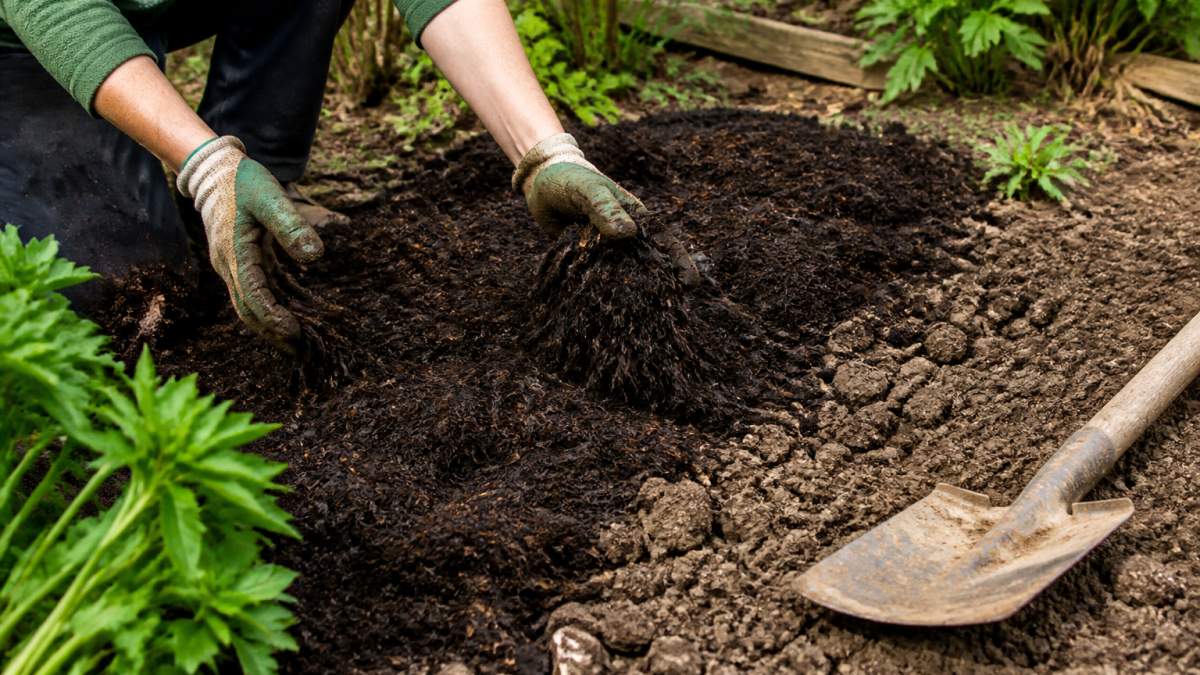
Here is how we would approach it:
- Spread a thick mulch of well-rotted compost each autumn
- Let it sit over winter and wash into the surface
- Plant through the mulch the following spring
- Repeat every year to build a workable top layer
The benefit is that you never damage the structure. The trade-off is speed. No-dig takes longer to show results on heavy ground, but the soil you end up with is far healthier.
The Best Compost for Clay Soil
Well-rotted organic matter is the best compost for clay soil, full stop. It binds the tiny clay particles into larger crumbs, which lets air and water move freely.
Look for:
- Well-rotted manure for nutrient value
- Green waste compost for bulk and structure
- Leafmould for a slow, gentle improvement
- Homemade compost if you have a decent heap
Avoid fresh manure, which can burn roots, and skip anything that smells sour or looks waterlogged.
How Much Compost to Add
Aim for a 5-8cm layer across the surface each year. On very heavy ground, go closer to 8cm. Spread it in autumn and let the weather work it in.
You do not need to dig it in. Worms will pull it down over the coming months, which is exactly what you want.
How Long It Takes to Improve Clay Soil
Expect meaningful improvement in two to three years with consistent mulching. The first year softens the surface. The second year gives you soil you can fork easily. By the third, most gardens are genuinely workable.
If you are tackling a whole lawn or a large border, it can take longer. The good news is that clay responds well once you start, and the gains hold.
Test your soil every autumn with a simple squeeze test. If it crumbles more easily than last year, your mulching is working. Keep going rather than switching methods.
Conclusion
Heavy clay is stubborn, but it is not a lost cause. Improve the structure with organic matter, respect the seasons, and give it time. The result is soil that holds nutrients and copes with dry spells far better than light, sandy ground ever will.
If you would rather hand the job to someone who knows these soils inside out, TLC Gardening can help. As a family-run team, we offer regular maintenance slots or one-off visits, expert advice on soil and planting, and pollinator-friendly planting that supports local bees and butterflies. Get a quote today and let us take the hard work off your hands.
Frequently Asked Questions
How can I improve heavy clay soil in my garden?
The most reliable method is to work in plenty of organic matter. Spread a 5-8cm layer of well-rotted manure or garden compost over the surface each autumn and let the worms pull it down. This opens up the tight structure of clay soil over time, improving both drainage and how well it holds nutrients. Avoid walking on wet clay, as compaction is the main enemy.
Should I add sand to clay soil?
In most cases, no. Adding sand to clay without also adding large amounts of organic matter can create a concrete-like mix that is harder to work than the original clay. If you do want to improve drainage in heavy clay soil, focus on organic matter, raised beds, or a drainage trench instead. Sand only helps when it makes up a very large proportion of the mix.
Can I improve clay soil without digging?
Yes. The no-dig approach works well on clay. Lay a thick mulch of compost or well-rotted manure on the surface each autumn and let worms and soil life incorporate it. It takes longer than digging but preserves soil structure and avoids bringing weed seeds to the surface. Raised beds filled with a compost-rich mix are another practical option for very heavy patches.
When is the best time to dig clay soil?
Dig clay soil in autumn, ideally October to November, when the ground is moist but not waterlogged. This gives frost all winter to break up the clods. Never dig or walk on clay when it is wet, as you will compact it further. If the soil sticks to your boots, wait for a drier spell.