
Table of Contents
- Why Autumn Is the Best Time to Sow Wildflower Seeds
- When to Sow Wildflower Seeds: Timing Your Autumn Sowing
- How to Prepare Ground for Wildflower Seeds
- Step-by-Step: How to Sow Wildflower Seeds in Autumn
- Sowing Wildflower Seeds on Grass: What Works and What Doesn’t
- Wildflower Seed Germination Time and Aftercare
- Common Mistakes to Avoid When Sowing in Autumn
- Conclusion
- Frequently Asked Questions
Last Updated: 18 October 2026
Why Autumn Is the Best Time to Sow Wildflower Seeds
Autumn is the best time to sow wildflower seeds because the soil is still warm, rain is reliable, and many native species need a cold spell before they will germinate. Sowing now lets nature do the work of stratification for you. At TLC Gardening, we specialise in wildflower creation across Oxfordshire.
Here is the key point most guides skip: autumn sowing mimics what happens in the wild. Plants drop seed in late summer and it sits through winter, then sprouts in spring. When you sow wildflower seeds in autumn, you copy that cycle instead of fighting it.
The benefits are simple:
- Warm soil speeds up root growth before the cold sets in
- Regular rain means less watering for you
- Frost and cold break down seed coats naturally
- Spring seedlings are stronger and flower earlier
Spring sowing can work, but it usually needs extra watering and often flowers later in the year.
When to Sow Wildflower Seeds: Timing Your Autumn Sowing
The best window to sow wildflower seeds is late August to the end of October, while the ground is still warm and before the first hard frosts. Aim for a day when rain is forecast within a week of sowing.
Timing matters more than most people think. Sow too early in a dry spell and seeds sit on hard ground. Sow too late and the cold slows everything down.
A simple rule: get seed in the ground at least four weeks before your area’s first expected frost. That gives roots time to establish. If you miss the window, early spring is your next chance.
How to Prepare Ground for Wildflower Seeds
Good ground preparation decides whether your wildflower patch thrives or fizzles. Wildflowers want poor, bare soil, not rich, fertile ground. The leaner the soil, the better the flowers and the fewer the weeds.
Clearing and Weeding the Site
Start by removing all existing grass, weeds and roots. Dig, scrape or use a turf cutter to strip the top layer. Then clear any debris and let the bare soil settle for a week or two.
Watch for a flush of new weeds after clearing. Hoe them off before they set seed. This step alone saves months of weeding later.
Improving Poor or Heavy Soil
Wildflowers hate rich soil. If your ground is heavy clay or full of nutrients, thin it out:
- Mix in sharp sand or grit to improve drainage
- Avoid compost and fertiliser, which feed weeds not flowers
- For very rich soil, remove the top layer and sow onto the poorer subsoil
A common mistake is treating wildflowers like bedding plants. They do not want feeding. Lean soil keeps them flowering and stops grasses taking over.
Step-by-Step: How to Sow Wildflower Seeds in Autumn
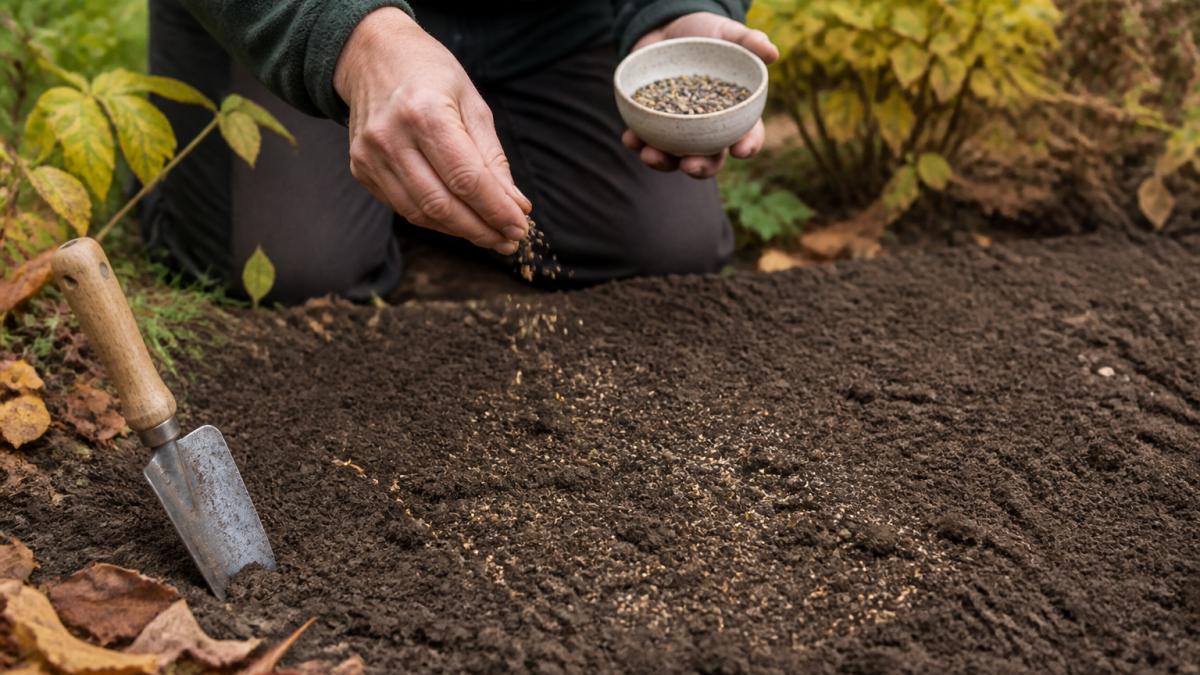
Here is how to sow wildflower seeds in autumn, step by step:
- Clear the ground of grass, weeds and roots
- Rake the surface to a fine, crumbly tilth
- Mix seed with sand (about one part seed to four parts sand) so it spreads evenly
- Scatter in two passes, once across and once along, to avoid bare patches
- Lightly rake in the seed, no deeper than a few millimetres
- Firm the soil by walking over it or rolling it
- Water gently if the weather stays dry
The sand trick is the one most people miss. Wildflower seed is tiny, and mixing it with sand shows you exactly where you have sown.
Never bury wildflower seed deep. Most native species need light to germinate, so a light rake and firm press is all the coverage they need.
Sowing Wildflower Seeds on Grass: What Works and What Doesn’t
Sowing wildflower seeds on grass rarely works if you simply scatter seed over an existing lawn. Thick grass crowds out young wildflowers and steals the light and water they need.
What does work:
- Thin the grass first by scarifying or removing patches
- Choose a yellow rattle approach to weaken grass naturally
- Sow into bare patches rather than over dense turf
What doesn’t work: scattering seed onto short, healthy lawn and hoping for the best. You will get grass, not flowers.
If you want a meadow look on an existing lawn, reduce the grass competition first. Then sow into the gaps.
Wildflower Seed Germination Time and Aftercare
Wildflower seed germination time varies by species, but most autumn-sown seeds sprout the following spring, roughly March to May. Some slow species take a full year, so patience pays.
Aftercare is light but important:
- Keep the area free of strong weed growth in the first year
- Water only during long dry spells
- Avoid cutting in the first spring, let plants establish
- From the first summer, cut once a year after flowering and remove the cuttings
Removing cuttings matters. Leaving them feeds the soil, and rich soil suits weeds better than wildflowers.
Do not add fertiliser or mulch to a wildflower patch. It encourages grass and weeds to swamp your flowers within a season.
Common Mistakes to Avoid When Sowing in Autumn
Most autumn sowing failures come down to a handful of avoidable errors. Here are the ones we see most often.
- Sowing onto rich soil feeds weeds, not flowers
- Burying seed too deep stops germination
- Skipping the weed clear lets grass win before flowers start
- Sowing too thinly leaves bare gaps that weeds fill
- Forgetting to firm the soil leaves seed exposed to birds and wind
- Watering too much in cold weather can rot seed
One more: expecting a perfect meadow in year one. Wildflower patches often look sparse at first and fill out in the second and third years. Give them time.
If you would rather not tackle the prep yourself, our team handles wildflower creation and pollinator planting across the region.
Conclusion
Sowing wildflower seeds in autumn is one of the easiest ways to bring colour and wildlife into a garden, provided you prep the ground and time it right. The main challenge is the groundwork, clearing, thinning and sowing at the correct depth, which is where most patches fail.
That is where TLC Gardening comes in. As a family-run business, we specialise in pollinator flowers and wildflower creation, and we time our maintenance around local wildlife. We offer regular slots or one-off visits.
Get a quote from TLC Gardening and turn a bare patch into a wildflower haven for bees and butterflies.
Frequently Asked Questions
Can you sow wildflower seeds in autumn?
Yes, and autumn is often the best time to sow wildflower seeds. The soil is still warm from summer, autumn rain keeps it consistently moist, and the cold winter that follows helps break seed dormancy naturally. Many native wildflowers, including cornflowers and poppies, germinate more reliably after a cold spell. Sow between September and November, before the first hard frosts, and you should see seedlings emerge the following spring.
Should you cover wildflower seeds after sowing?
Only lightly. Wildflower seeds need contact with soil and some light to germinate, so covering them deeply will stop them growing. After sowing, press the seed into the soil with a board or the back of a rake, then scatter a very thin layer of soil or fine compost over the area, no more than 5mm deep. On sloped ground, a light covering helps stop rain washing the seed away, but keep it thin.
How long do wildflower seeds take to grow?
Wildflower seed germination time varies by species and season. Autumn-sown seeds typically germinate the following spring, usually within two to four weeks once soil temperatures rise above about 10°C. Some species germinate within 14 days, while slower perennials can take several weeks longer. Don’t panic if nothing appears over winter, as the seeds are dormant and waiting for warmer conditions. First flowers usually appear in the first summer after sowing.
Will wildflowers come back every year?
It depends on the mix. Annual wildflowers such as poppies and cornflowers complete their life cycle in one year but self-seed freely if you let them set seed before cutting back. Perennials like ox-eye daisies and knapweed return year after year. To keep a meadow going long term, choose a mix with a good proportion of perennials, avoid cutting before seed has dropped, and top up with fresh seed every couple of years where bare patches appear.