
Table of Contents
- What Lawn Care Services for Estates Actually Involve
- Building a Lawn Care Maintenance Schedule That Holds Up
- Patchy Grass Repair Across Large Lawns
- Lawn Aeration and Scarification: Timing and Technique
- Wildflower Lawn Management Without Losing the Tidy Look
- How Estate Contracts Are Priced and Scoped
- Choosing a Lawn Care Provider for a Large Property
- Frequently Asked Questions
Last Updated: 9 October 2026
What Lawn Care Services for Estates Actually Involve
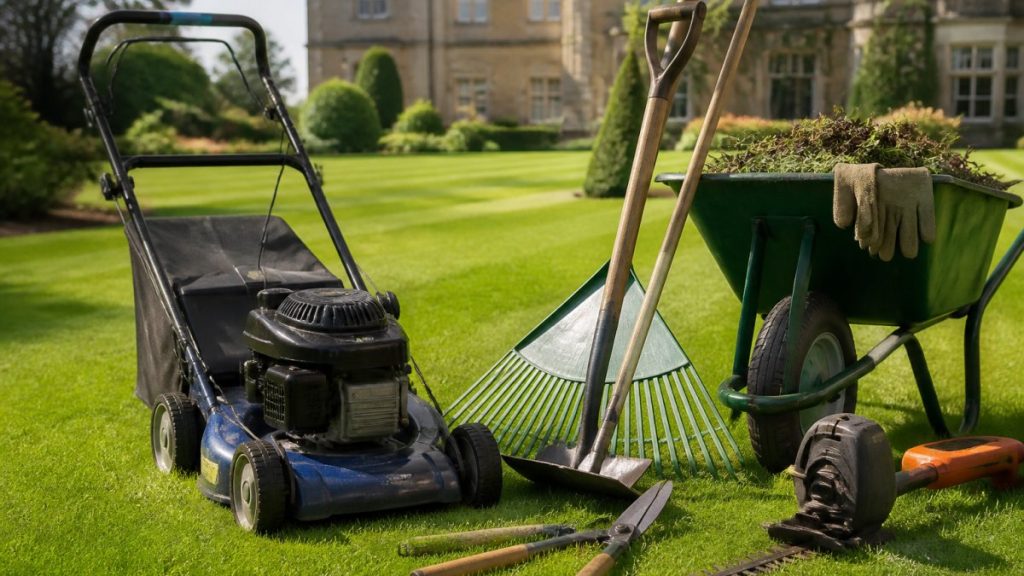
Lawn care services for estates cover far more than mowing. On a large property, the work splits into several disciplines: regular cutting, edging and strimming, seasonal feeding, weed and moss control, leaf clearance, aeration, scarification, and the management of any meadow or wildflower areas. Each one follows its own calendar.
At TLC Gardening, we treat an estate lawn as a system rather than a single job. A half-acre lawn beside a gravel drive behaves nothing like a walled garden lawn, even when both sit on the same property. Grass type, shade, drainage and foot traffic all change what the lawn needs.
That is why a fixed weekly visit rarely suits a large garden on its own. The best programmes combine frequent light work with a few deeper interventions each year.
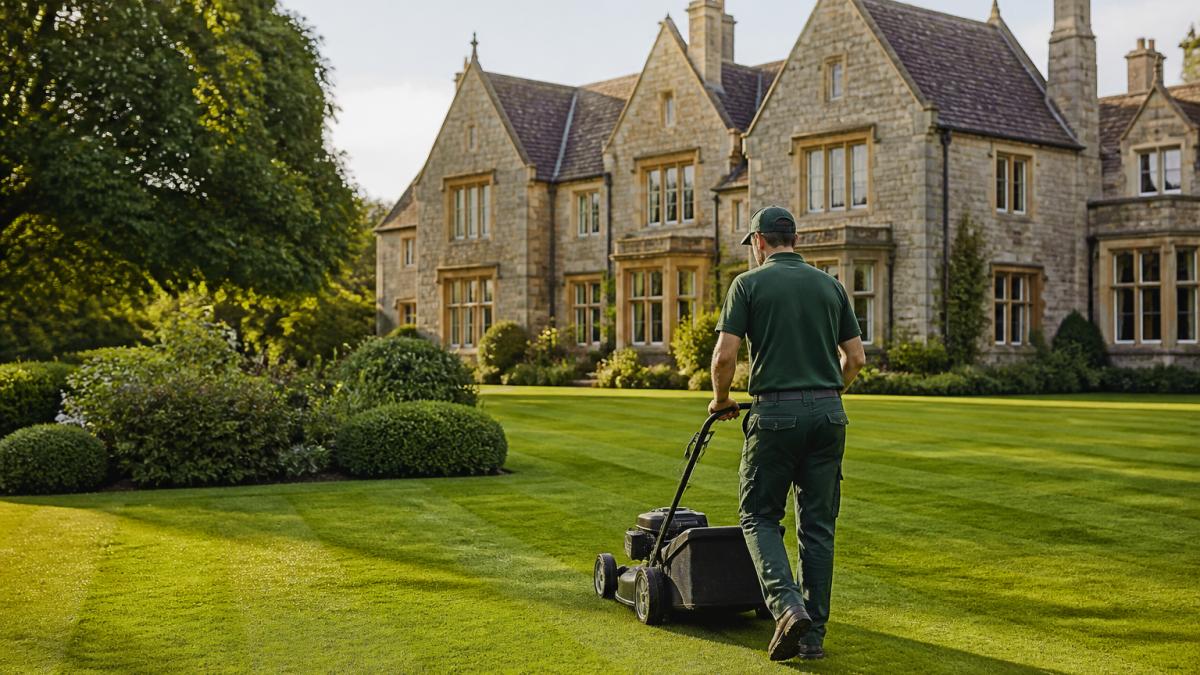
An estate lawn needs two layers of care: routine visits to keep it presentable, and scheduled seasonal work to keep it healthy. Skipping the second layer is why so many large lawns thin out within a few years.
Building a Lawn Care Maintenance Schedule That Holds Up
A lawn care maintenance schedule is a written plan setting out what happens to each lawn area, how often, and in which month. Without one, large gardens drift: the front lawn gets all the attention while the orchard grass quietly turns to moss.
A workable schedule for a large property usually looks like this:
| Period | Routine work | Seasonal work |
|---|---|---|
| March to May | Weekly cut, edges, strim | First feed, weed control, overseed bare patches |
| June to August | Weekly or fortnightly cut | Irrigation checks, height raised in dry spells |
| September to November | Fortnightly cut, leaf clearance | Aeration, scarification, autumn feed |
| December to February | Occasional cut in mild spells | Tool servicing, bed and border planning |
The most common mistake is cutting too short in spring. Scalping the lawn to tidy it after winter weakens the grass just as it needs to build strength.
Patchy Grass Repair Across Large Lawns
Patchy grass repair on a large lawn is a diagnosis job before it is a seeding job. Throwing seed at bare patches without knowing why the grass died usually means the same patches return within a season.
We group the usual causes into four types:
- Shade and competition: tree roots and dense canopies starve grass of light and water
- Compaction: heavy foot traffic or machinery squeezes the soil so roots cannot spread
- Wear: regular routes across a lawn, such as a path to a shed, thin out over time
- Thatch and moss: a build-up of dead material smothers new growth
The fix follows the cause. Compacted ground needs aeration before overseeding. Shaded areas may need a different seed mix rather than more of the same. If you are unsure what you are dealing with, it is worth having someone look at the lawn before spending money on seed.
When repairing patches, match the seed to the conditions, not to the rest of the lawn. A shady corner will never grow the same mix as an open, sunlit stretch, and pretending otherwise wastes a season.
Lawn Aeration and Scarification: Timing and Technique
Lawn aeration and scarification are two different jobs that people often confuse. Aeration punches holes in the soil to relieve compaction and let air and water reach the roots. Scarification rakes out the layer of dead material, called thatch, that builds up at the base of the grass.
Timing matters more than technique for both. The usual window is early autumn, when the grass is still growing but the heat of summer has passed. Spring is a secondary option for aeration on lawns that drain poorly.
Doing either job at the wrong time causes real damage. Scarifying in the middle of a dry summer strips a lawn back when it has no energy to recover. Aerating frozen or waterlogged ground simply makes a mess of the surface.
Royal Horticultural Society guidance on lawn maintenance
Wildflower Lawn Management Without Losing the Tidy Look
Wildflower lawn management is the practice of managing part of a lawn as a meadow while keeping the rest formal. It works best when the two areas are clearly separated, so the wilder section reads as a deliberate feature rather than neglect.
The practical approach is to divide the lawn. Keep the main lawn cut regularly. Let a defined area, perhaps a strip along a boundary or around a fruit tree, grow longer and flower. Mow that area once or twice a year, after the flowers have set seed, and remove the cuttings.
That last step is the one people skip. Leaving cuttings on a meadow area feeds the soil and encourages coarse grasses, which crowd out the wildflowers you were trying to grow.
Pollinator-friendly planting fits naturally into this kind of plan. Timed correctly, a meadow strip can support bees and butterflies through the season while the formal lawn stays sharp.
Wildlife Trusts advice on gardening for pollinators
How Estate Contracts Are Priced and Scoped
Pricing for estate lawn care depends on the size and complexity of the property, not on a flat rate. A quote usually reflects the area to be maintained, the number of distinct lawn zones, access, the level of finish expected, and how much seasonal work is included.
Because there is no standard figure, the sensible move is to ask for a written scope before agreeing to anything. A good quote should state:
- Which areas are covered and how often they are visited
- What routine work is included, such as cutting, edging and clearing
- Which seasonal treatments are part of the contract and which cost extra
- How green waste is removed from the site
- What happens if a visit is missed because of weather
If a quote is vague about any of these, expect the gaps to become disagreements later. For current rates, it is best to request a quote based on your own property rather than compare headline figures.
The cheapest quote often excludes green waste removal and seasonal treatments. Once those are added back in, the gap between quotes usually narrows sharply, and the cheaper option is rarely the better value.
Choosing a Lawn Care Provider for a Large Property
Choosing a provider for a large property comes down to three things: consistency, expertise and trust. A large lawn shows every missed visit, so reliability matters as much as skill.
Ask how the team handles diagnosis, not just maintenance. A provider who can identify why a lawn is failing is worth more than one who simply cuts it. Ask too how the schedule adapts through the year, and whether the same people will attend each visit.
For property managers and estate owners, the working relationship matters. Regular slots, clear communication and a team you are comfortable having on site week after week are what make a contract run smoothly.
This is where a family-run, local service tends to suit large gardens well. TLC Gardening provides regular or one-off visits across Oxford and Oxfordshire, with maintenance timed around local wildlife. We specialise in pollinator flowers and wildflower creation, so a meadow area can be planned alongside the formal lawn rather than fought against.
Frequently Asked Questions
What lawn care services are typically included in an estate maintenance plan?
Most estate contracts cover mowing at a set frequency, edge trimming, strimming around obstacles, seasonal feeding, weed and moss control, and removal of clippings. Larger properties usually add aeration and scarification, border and hedge work, and leaf clearance in autumn. If you want wildflower or pollinator areas, that is normally scoped as a separate zone with its own cutting regime, so the formal lawn stays sharp while the meadow area is managed on a different cycle.
How often should estate lawns be mown?
Through the main growing season, most formal lawns need cutting every seven to ten days to stay looking sharp. Larger estates often split the work into zones so the main lawn is done weekly and outer areas fortnightly. Frequency should flex with growth rather than follow a fixed calendar, since a wet mild spell can push growth well ahead of schedule. In spring and autumn, fortnightly visits are usually enough.
Can lawn care services include wildflower areas and pollinator-friendly planting?
Yes, and it works best when the wildflower area is planned as a distinct zone rather than left to spread. Wildflower lawn management usually means a low-fertility strip cut once or twice a year, with clippings removed so the soil stays poor enough for wildflowers to compete. The formal lawn beside it continues on its normal schedule, so the overall garden still reads as maintained rather than neglected.
How do you choose a lawn care company for a large property?
Ask what equipment they bring, how they handle access and gates, whether the same team attends each visit, and how they deal with a missed or rescheduled appointment. For estates, insurance cover and a written scope matter as much as price. Request a site visit before quoting, and check whether they will diagnose issues such as compaction or moss rather than just mowing over them each week.
A large lawn is unforgiving. Miss a few weeks and the moss, the thatch and the bare patches all arrive at once, and putting it right costs more than keeping on top of it would have. TLC Gardening offers regular slots or one-off visits, expert advice on lawn maintenance, and wildflower and pollinator planting timed with local wildlife in mind. Get a quote from TLC Gardening and keep your grounds looking their best through every season.