
Table of Contents
- Why Is My Lawn Patchy? Start With a Simple Diagnosis
- Common Causes of Bare Spots in a Lawn
- How to Fix Patchy Grass: A 7-Step Plan
- The Best Time to Sow Grass Seed
- Grass Seed Germination Time: What to Expect Week by Week
- Common Mistakes That Keep Lawns Patchy
- When to Call in Professional Lawn Care
- Frequently Asked Questions
Last Updated: October 4, 2026
Why Is My Lawn Patchy? Start With a Simple Diagnosis
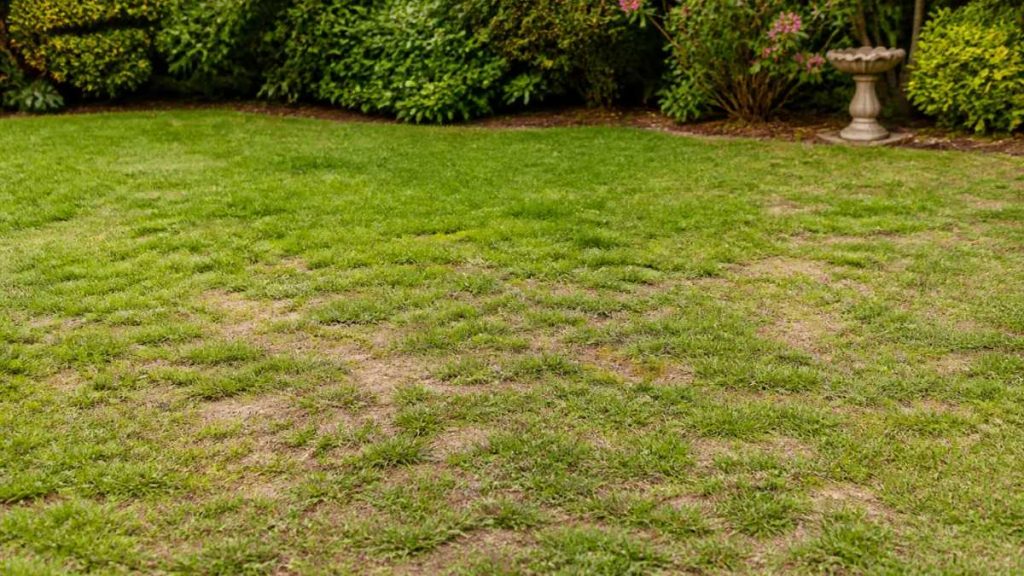
If you are staring at bare, thinning grass and wondering why is my lawn patchy, the answer is usually one of a small handful of problems: shade, compacted soil, drought, pests, pets or disease. The fix depends entirely on which one you are dealing with, so diagnosis comes first.
Homeowners often treat the symptom by throwing down seed, then wonder why nothing takes. The real cause is still there, waiting to kill the new growth.
A patchy lawn is rarely a mystery. It is a message. The shape, position and timing of the bare spots tell you what went wrong, if you know how to read them.
Below, we break down the common causes, then give you a 7-step plan to fix patchy grass for good. We also cover the best time to sow grass seed and how long germination actually takes, so your repair work lands the first time.
Common Causes of Bare Spots in a Lawn
Bare spots in a lawn come from four main sources: too much shade, soil that has been squashed flat, damage from mowers or pets, and pests or disease. Most patchy lawns have more than one cause working at once.
Shade and competition from trees and hedges
Grass needs light to thicken up. Under trees and along hedge lines, it rarely gets enough.
Tree roots also steal water and nutrients from the soil below. The grass loses on both fronts.
Look for bare patches that match the shadow pattern across the day. That is your tell.
Soil compaction, drought and mower damage
Compacted soil is the most overlooked cause we see. When soil is pressed flat, water runs off instead of soaking in, and roots cannot push down.
Signs to check for:
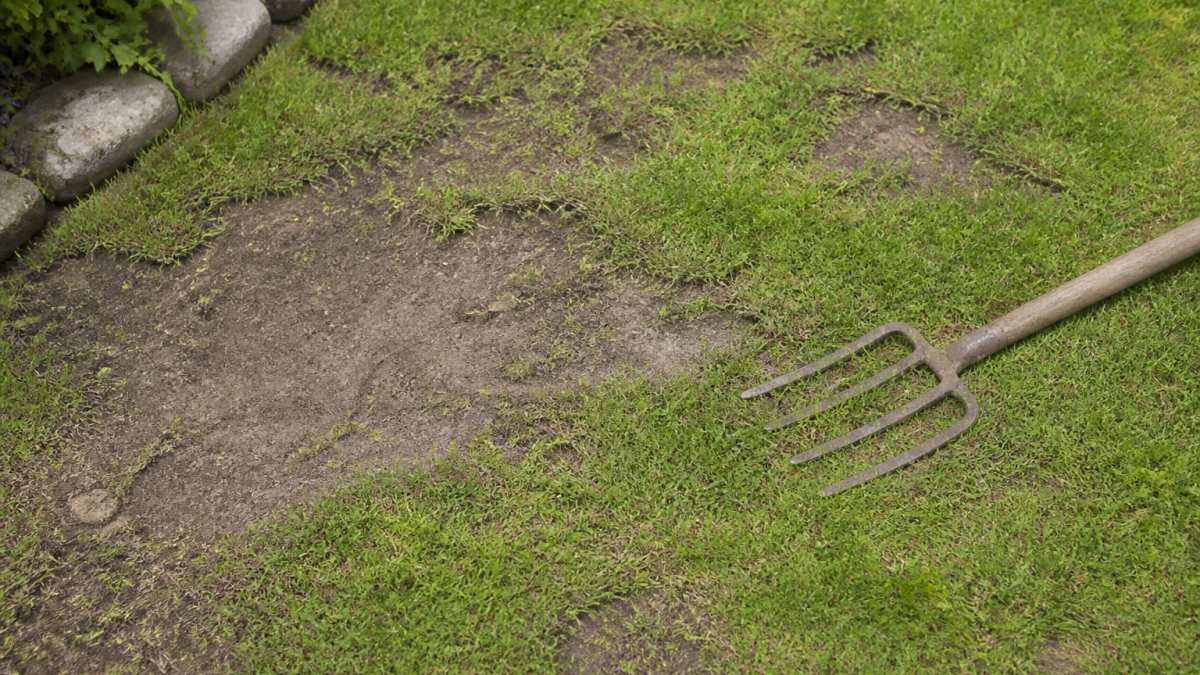
- Soil feels hard when you push a fork in
- Water pools on the surface after rain
- Moss is spreading in the thin areas
- The lawn feels spongy or springy underfoot
Cutting the grass too short also weakens it. Scalped grass loses its ability to recover.
Pests, pets and disease
Dog urine burns circular patches with a dark green ring around them. That pattern is hard to mistake.
Leatherjackets and chafer grubs eat grass roots from below, so the turf lifts away like a loose carpet. Birds and badgers then tear up the lawn hunting for them.
Fungal disease tends to show up in warm, damp spells, often as irregular brown patches that spread outward.
How to Fix Patchy Grass: A 7-Step Plan
To fix patchy grass, clear the dead material, loosen and feed the soil, then sow fresh seed and keep it damp until it establishes. Protection from birds and foot traffic matters just as much as the seed itself.
Here is the full sequence we use.
Step 1: Clear and prepare the bare patch
Cut the edges of the patch with a half-moon edger so you have a clean, square shape.
Remove dead grass and any loose debris. Fork over the top few centimetres to break up the surface.
Step 2: Loosen soil, level and feed
Push a garden fork into the soil and rock it back and forth to open up the compacted layer. Work across the whole patch.
Mix in a handful of garden compost or a light lawn dressing to improve structure. Rake the area level so seed does not collect in hollows.
Step 3: Sow, water and protect
Scatter seed at the rate on the packet, then lightly rake it in so it sits in contact with the soil, not on top of it.
Water gently and keep the patch damp for the next few weeks. Cover with netting if birds are a problem in your garden.
Sow seed slightly thicker at the edges of the patch than in the middle. The edges dry out first, so the extra seed compensates for the harsher conditions there.
The Best Time to Sow Grass Seed
The best time to sow grass seed is early autumn, from September into October, when the soil is still warm but the air has cooled. Early spring, from March to April, is the second-best window.
Autumn wins because the ground holds warmth from summer while weed growth slows down. Seed germinates quickly with less competition.
Spring sowing works, but you will need to water more often as the weather warms. Summer sowing usually fails unless you can water daily.
| Season | Sowing Window | Why It Works | Main Risk |
|---|---|---|---|
| Autumn | September to October | Warm soil, cool air, fewer weeds | Early frost on late sowings |
| Spring | March to April | Soil warming up, good moisture | Needs regular watering |
| Summer | Avoid if possible | Fast germination in theory | Dries out, seed fails |
Grass Seed Germination Time: What to Expect Week by Week
Grass seed germination time is typically 7 to 21 days, depending on the mix and the weather. Fine lawn mixes tend to be slower than hard-wearing utility mixes.
Here is the realistic timeline:
- Week 1: Keep the surface damp. Nothing visible yet, but the seed is taking on water.
- Week 2: First green shoots appear on faster varieties.
- Week 3: Most of the patch should show growth. Slower varieties catch up.
- Week 4 to 6: Seedlings thicken and knit together.
- Week 6 to 8: First light cut, once the new grass is tall enough.
Do not let the patch dry out at any point in the first three weeks. One dry day can wipe out a whole sowing.
Common Mistakes That Keep Lawns Patchy
The biggest mistake is sowing seed onto the same problem that caused the bare patch in the first place. If the soil is compacted or the area is in deep shade, new seed will fail just like the old grass did.
Other mistakes we see often:
- Cutting the new grass too early or too short
- Watering heavily once instead of lightly and often
- Skipping the soil preparation step
- Using the wrong seed mix for the light levels
- Letting pets back onto the patch before it establishes
Never walk on a newly sown patch for at least four weeks. Foot traffic on damp seed beds compacts the soil again and crushes the young shoots before they can root.
When to Call in Professional Lawn Care
Some patchy lawns need more than a bag of seed. If the same spots go bare year after year, the underlying soil or drainage problem needs proper diagnosis.
That is where professional lawn care earns its keep. A trained eye spots compaction, drainage and shade issues that are easy to miss.
At TLC Gardening, we are a family-run team covering Oxford and Oxfordshire. We handle regular garden maintenance and one-off seasonal clean-ups. Our work is timed with local wildlife in mind, and we specialise in pollinator-friendly planting and wildflower creation for gardens that support bees and butterflies.
If your lawn has been patchy for more than one season, get a quote and let us take a proper look. You will get expert advice on what is actually causing the problem, not just another bag of seed.
Frequently Asked Questions
Why is my lawn patchy after winter?
Winter patchiness usually comes from a mix of waterlogging, frost damage and moss taking hold in compacted or shaded areas. Grass stops growing when soil temperatures drop below about 5°C, so any weak spots get worse. Once the soil warms in spring, rake out dead moss, aerate the compacted areas and overseed the bare patches. If the same spots go bare every year, the underlying cause is probably drainage or shade rather than the cold itself.
Will patchy grass grow back on its own?
Sometimes, but only if the cause has gone. Thin grass will fill in from neighbouring plants if the lawn is fed, watered and not scalped when mowing. Bare soil usually stays bare because there is nothing left to spread from. If the patch is larger than a dinner plate, or the soil is compacted or shaded, you will get faster results by loosening the surface and sowing fresh seed rather than waiting for nature to do it.
How do I stop birds eating grass seed?
Birds are the main reason newly sown patches fail. Cover the seed with a thin layer of sieved soil or compost so it is not sitting on the surface, then firm it down gently. A light scattering of horticultural fleece or a few criss-crossed strings above the patch discourages them without harming wildlife. Watering the seed in straight after sowing also helps it settle into the soil, where birds cannot easily reach it.
Can dog urine cause dead patches in a lawn?
Yes. Dog urine is high in nitrogen, which burns grass in the centre of the spot and leaves a dark green ring around it. Bitches tend to cause more damage because they squat and concentrate urine in one place. Water the area thoroughly within a few hours of the event to dilute it, and train your dog to use a gravel or bark area instead. Once the patch is dead, rake it out and reseed as you would any other bare spot.
A patchy lawn will keep coming back until you fix the cause, not just the symptom. TLC Gardening diagnoses the real problem, repairs the ground properly and keeps your garden looking its best all year. With regular maintenance slots, pollinator-friendly expertise and local care across Oxfordshire, we make lawn recovery simple. Get a quote from TLC Gardening and get a lawn you no longer have to apologise for.