
Table of Contents
- Why Maintaining Garden Privacy and Security Matters Year-Round
- Choosing the Best Privacy Plants for UK Gardens
- Garden Fence Height Regulations: What You Need to Know
- Security Lighting for Gardens: A Practical Setup Guide
- Keeping Your Garden Private and Secure While Supporting Wildlife
- Common Mistakes That Undermine Garden Privacy and Security
- Maintenance Checklist for Year-Round Protection
- Frequently Asked Questions
Last Updated: September 21, 2026
Why Maintaining Garden Privacy and Security Matters Year-Round
Maintaining garden privacy and security is the ongoing work of keeping your outdoor space screened from view and safe from intruders in every season. It matters because a garden that feels exposed or unsafe stops being a place you actually use. At TLC Gardening, we see this constantly across Oxfordshire: a hedge that looks fine in July turns see-through by January.
Privacy is not a one-off job. It is a routine.
Below, we’ll show you exactly how to plan plants, fences, and lighting so your garden stays private and secure all year.
Choosing the Best Privacy Plants for UK Gardens
The best privacy plants for UK gardens are evergreens for year-round cover, paired with fast growers to fill gaps quickly. Match the plant to your soil, light, and how much space you have.
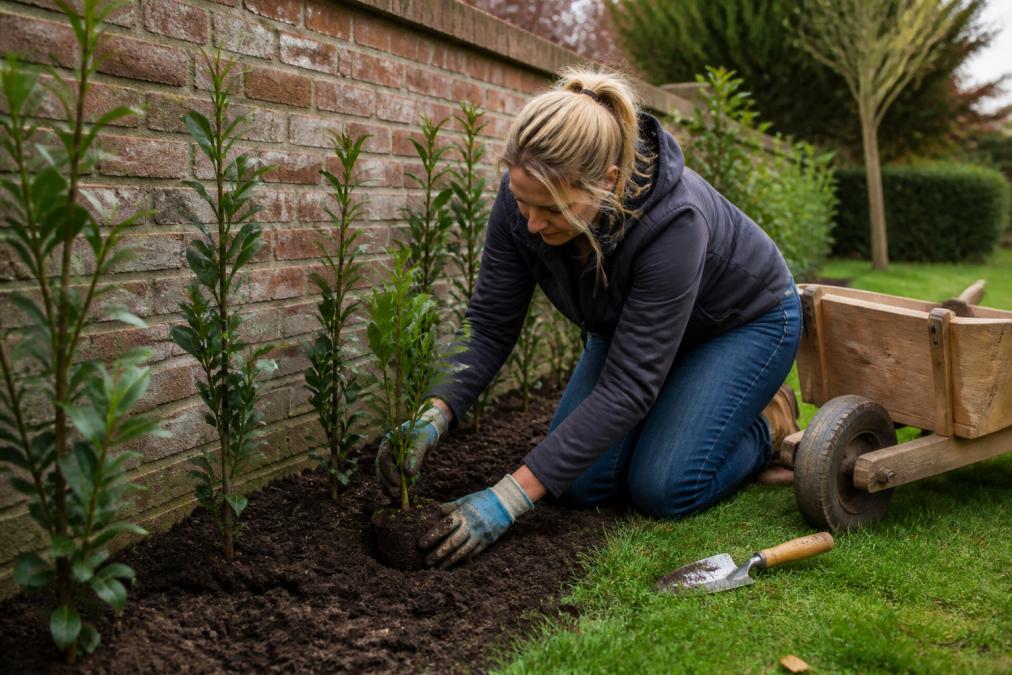
The mistake most people make is planting only for summer. Deciduous screening drops its leaves exactly when you want cover most.
Evergreen Options That Keep Their Cover in Winter
Evergreens hold their leaves or needles through winter, so your boundary never goes bare. Good choices include yew, holly, and box. Yew is slow but dense and long-lived. Holly gives you prickly security as a bonus. Box suits low, formal hedging.
Fast-Growing Screening for Quick Results
Fast growers give you cover in a season or two, but they need more trimming. Bamboo, leylandii, and laurel are popular. Bamboo works well in a contained bed. Leylandii grows fastest but demands regular cutting or it swallows the garden.
Garden Fence Height Regulations: What You Need to Know
Garden fence height regulations in England cap most boundary fences at two metres without planning permission. A fence or wall next to a highway has tighter limits. Rules differ for front gardens and for listed properties.
The exact figures sit in the government’s planning permission guidance on fences, walls and gates. Always check that page before you build, because local rules can be stricter.
Planning Permission and Boundary Rules
You usually need planning permission if your fence is over two metres, or over one metre next to a road (Walls and fences). You also need it for fences on listed buildings and in some conservation areas.
Boundary rules are separate from height rules. A fence does not prove where your boundary legally sits. If you are unsure, check your title deeds or ask the council.
Building a fence over the height limit without permission can force you to take it down at your own cost. Check the rules first, not after the posts are in.
Security Lighting for Gardens: A Practical Setup Guide
Security lighting for gardens works best with motion sensors on the approach points, not floodlights blazing all night. Light the path, the gate, and the shed. Leave the rest dark.
Here is a simple setup that covers most homes:
| Zone | Light Type | Trigger | Why |
|---|---|---|---|
| Gate and path | Low-level wall light | Motion sensor | Lights the way in, startles intruders |
| Shed or garage | Floodlight | Motion sensor | Covers a high-value target |
| Back door | Warm porch light | Timer | Steady light, no glare |
| Borders | Solar stake lights | Dusk sensor | Adds cover, no wiring |
Motion Sensors, Timers and Wildlife-Friendly Choices
Motion sensors save power and avoid lighting up the whole street. Set them to stay on for a short burst, not minutes.
Timers keep a soft light on at dusk, which makes the house look occupied. That alone puts off most opportunists.
Wildlife matters here too. Hedgehogs, moths, and bats are thrown off by bright light all night. Use warm bulbs, shield them downward, and keep sensors pointed at hard surfaces, not at hedges where animals move.
Aim sensors at the ground and walls, not across your beds. You get the same coverage with far less disturbance to night wildlife.
Keeping Your Garden Private and Secure While Supporting Wildlife
You can have privacy, security, and a garden full of bees and butterflies. The trick is choosing layered planting and gentle lighting instead of hard barriers everywhere.
Dense native hedging does double duty. It blocks sightlines and gives birds and insects somewhere to live. A mixed hedge beats a single species for both.
At TLC Gardening, our pollinator-friendly and wildflower work is built around this idea. A wildflower strip along a boundary adds cover, feeds bees, and still looks tidy when it is cut back on schedule.
Bulbs and perennials near the fence line soften the hard edge of any barrier. You get screening without a fortress feel.
Common Mistakes That Undermine Garden Privacy and Security
Most privacy and security failures come down to a handful of repeat mistakes. Here are the ones we see most often:
- Planting only deciduous screening, so cover vanishes each winter
- Building a fence over the height limit and facing enforcement action
- Floodlighting the whole garden, which spoils the view for you and your neighbours
- Leaving a side gate unlocked, which cancels out every other measure
- Letting hedges grow too tall to trim safely, then neglecting them entirely
- Ignoring the base of hedges, where gaps open up and expose the garden
Maintenance Checklist for Year-Round Protection
Use this checklist to keep your garden private and secure through every season. It takes minutes a week and a few bigger jobs a year.
- Walk the boundary monthly and check for gaps at the base of hedges
- Trim fast-growing screening twice a year to keep it dense
- Test motion sensors and replace batteries each autumn
- Clear leaves and debris from fence panels before winter storms
- Check gate locks and hinges every season
- Cut back wildflower strips on schedule so they stay neat
- Re-mulch beds in spring to keep plants healthy and full
- Inspect lighting after high winds and heavy rain
A regular slot makes this easy. TLC Gardening times maintenance around local wildlife, so trimming and cutting happen when they do least harm to bees and butterflies.
Royal Horticultural Society guidance on hedges and screening
Frequently Asked Questions
What are the best plants for garden privacy screening?
Evergreen shrubs like laurel, yew and photinia provide year-round cover and work well in most UK gardens. For faster results, consider leylandii or bamboo, though both need regular control to stop them spreading. Mixing two or three species gives you better resilience against pests and disease, and planting in autumn gives roots time to settle before winter. Check mature heights before buying so the screen does not outgrow the space.
Are there legal height restrictions for garden fences in the UK?
In most cases, a garden fence next to a boundary can be up to two metres high without planning permission. If your garden fronts a highway, the limit drops to one metre. Anything taller usually needs approval from your local planning authority. Always check your property deeds too, because some have covenants that restrict fence height or style regardless of national rules.
How do I deter intruders while maintaining a wildlife-friendly garden?
Use motion-activated lights with warm bulbs rather than floodlights that stay on all night, and position them to illuminate pathways rather than nesting areas. Prickly hedges like hawthorn or holly create a natural barrier without harming wildlife. Gravel paths make footsteps audible, and a locked side gate removes easy access. These measures discourage intruders while leaving hedgehogs and birds undisturbed.
What are the most effective low-maintenance security measures for gardens?
Start with a sturdy lock on every gate and check fence panels for rot each spring. Motion-sensor lighting needs almost no upkeep beyond occasional bulb changes. Trim hedges twice a year to keep sightlines clear and remove climbing plants that could hide damage. A simple gravel border along a fence line makes approach noisy. These steps take a few hours a year and cover most common weaknesses.
A private, secure garden takes planning and steady upkeep, and most homeowners simply run out of time. TLC Gardening handles it for you as a family-run team with regular slots or one-off visits across Oxfordshire. We keep your hedges dense, your lighting working, and your borders pollinator-friendly, timed around local wildlife. Get a quote from TLC Gardening and keep your garden private, secure, and full of life all year.