Table of Contents
- What Professional Garden Transformation Services Actually Include
- Garden Makeover Ideas That Suit Real Oxfordshire Gardens
- What Garden Design Services Bring to a Transformation
- Garden Renovation: Fixing Patchy Lawns, Overgrown Borders and Tired Patios
- Garden Privacy and Security: Planting, Screening and Practical Boundaries
- How Much Do Professional Garden Transformation Services Cost?
- How to Choose a Garden Transformation Provider You Can Trust
- Conclusion
- Frequently Asked Questions
Last Updated: October 6, 2026
What Professional Garden Transformation Services Actually Include
Professional garden transformation services cover the full process of turning a tired outdoor space into something you actually want to spend time in. That means clearing what’s overgrown, reshaping the layout, improving the soil, and planting it back up properly. At TLC Gardening, we run these projects across Oxford and Oxfordshire, and the scope is usually wider than people expect.
The term covers everything from a single-day tidy-up to a multi-week redesign. Most homeowners come to us wanting the middle ground: a garden that looks intentional, suits how they actually use it, and doesn’t need constant fuss to stay that way.
From Clearance to Planting: The Full Scope
A typical transformation moves through five stages:
- Clearance: removing overgrowth, dead planting, rubble and old hard landscaping
- Ground preparation: improving soil structure, levelling, and dealing with drainage
- Hard landscaping: patios, paths, edging, raised beds and boundaries
- Planting: borders, specimen shrubs, trees and seasonal colour
- Aftercare: the first season of watering, feeding and pruning to get everything established
What most guides miss is that stage two decides whether the rest survives. Skip proper ground preparation and even expensive planting struggles within a year.
One-Off Transformations vs Ongoing Maintenance
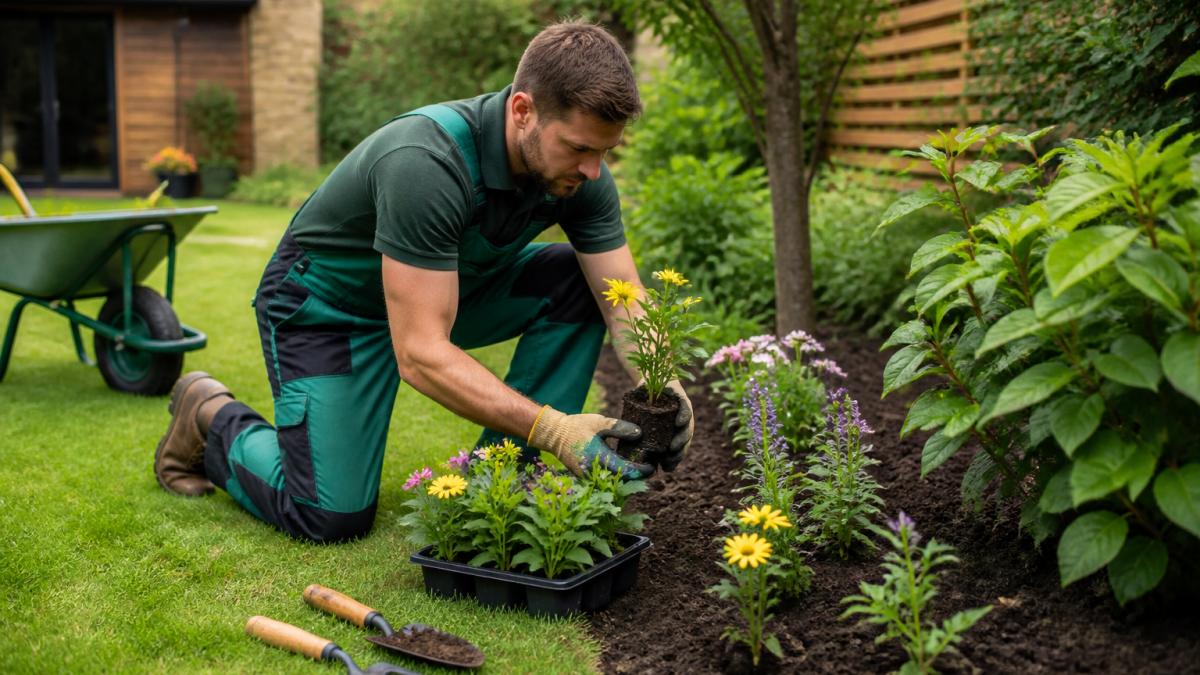
A one-off transformation rebuilds the garden. Ongoing maintenance keeps it that way.
Many clients start with a transformation and then move to a regular visiting slot. Others only want the reset and prefer to handle the upkeep themselves. Both are reasonable, but be honest about which one you’ll actually keep up with. A freshly planted border looks superb in June and chaotic by the following spring without someone deadheading, cutting back and weeding.
Ask any provider what the garden will look like twelve months after handover, not on the day they finish. A good transformation plan accounts for how fast each plant grows and how much space it will need.
Garden Makeover Ideas That Suit Real Oxfordshire Gardens
Garden makeover ideas only work if they fit the plot you actually have. Oxfordshire gardens range from narrow Victorian terraces to large plots with heavy clay and mature trees, and the same design fails in different ways across all of them.
Start with the constraints, not the mood board. Where does the sun fall in the afternoon? Where does water sit after heavy rain? Which boundaries are overlooked? Answer those three questions and your options narrow fast, in a useful way.
Themes that hold up well here:
- Wildlife-friendly borders with pollinator plants, which look deliberate when they’re structured properly
- Gravel and drought-tolerant planting for hot, free-draining spots
- Raised beds where the underlying soil is poor or compacted
- Mixed native and ornamental planting for year-round interest
- Simple lawn shapes with clean edges, which make small gardens feel larger
The mistake is copying a scheme from a garden with different light, soil and rainfall. A planting plan that thrives two counties away can sulk here.
What Garden Design Services Bring to a Transformation
Garden design services turn a set of ideas into a plan someone can actually build and plant. A designer surveys the space, measures it, works out levels and drainage, and produces a layout with a planting schedule. That plan is what stops a transformation becoming a series of expensive guesses.
For straightforward plots, many homeowners skip formal design and work directly with a maintenance and landscaping team. That’s fine when the changes are modest. Once you’re moving boundaries, changing levels or rethinking how the whole garden is used, a proper plan pays for itself by preventing rework.
We often see the same issue: a garden redesigned twice in three years because the first attempt ignored drainage. Fixing the cause costs far less than rebuilding the beds.
Garden Renovation: Fixing Patchy Lawns, Overgrown Borders and Tired Patios
Garden renovation is about repairing what’s already there rather than starting from scratch. It’s usually cheaper than a full redesign and, done well, delivers most of the visual improvement. The three most common jobs we’re asked to take on are patchy lawns, borders that have been left for years, and patios that have gone green and uneven.
Diagnosing Problem Lawns Before You Spend Money
Patchy grass almost always has a cause, and treating the symptom wastes money. Before buying seed or turf, work through the likely culprits:
- Compaction: soil pressed hard by foot traffic, so water and air can’t get in
- Shade: too little light for the grass species you have
- Poor drainage: water sitting after rain, which drowns roots
- Thatch: a build-up of dead material blocking light and moisture
- Wear: a route across the lawn that gets used constantly
A common mistake is reseeding a lawn that’s compacted or waterlogged. The new seed fails for exactly the same reason the old grass did.
Do not lay new turf over a lawn with a drainage problem. It will look fine for a few weeks, then fail in the first wet spell, and you’ll have paid twice for the same result.
Garden Privacy and Security: Planting, Screening and Practical Boundaries
Garden privacy and security come down to two things: what people can see, and what they can easily get past. Planting solves the first. Fencing, gates and lighting handle the second.
For screening, choose plants by how quickly they grow and how much maintenance they need. Fast-growing evergreens give quick cover but demand regular clipping. Slower species take longer to establish and then behave themselves. Hedge height also matters, since tall hedges can shade a border into failure.
Practical security measures worth considering:
- Solid boundary fencing in good repair, since a broken panel invites attention
- Lockable side gates to close off rear access
- Prickly boundary planting such as holly or berberis along vulnerable edges
- Motion-sensor lighting rather than lights left on all evening
Privacy planting and security planting overlap, but they aren’t the same job. Sort out what you’re actually trying to solve before ordering anything.
How Much Do Professional Garden Transformation Services Cost?
Pricing for garden transformation services depends on the size of the plot, how much clearing is needed, the materials chosen and how much hard landscaping is involved. There is no meaningful flat rate, and any provider quoting one without seeing the garden is guessing.
The honest answer is that a small tidy-up, a border replant and a full redesign with new paving sit in completely different brackets. TLC Gardening doesn’t publish fixed prices for this reason. We visit, look at the space, and quote based on what the job genuinely needs.
Get a written quote that separates labour, materials and disposal. Ask what happens if the scope changes mid-project. Ask whether the quote includes removing waste from site. Those three questions surface most of the hidden costs before you commit.
guidance on hiring a trader and your consumer rights
How to Choose a Garden Transformation Provider You Can Trust
Choose a provider who can explain their plan in plain terms, shows you comparable work, and puts the quote in writing. Everything else follows from those three things.
Red flags to watch for:
- A quote given over the phone without seeing the garden
- No written breakdown of labour and materials
- Pressure to pay a large deposit upfront
- Vague answers about who will actually be on site
Ask how the team is vetted. Ask what happens if you’re unhappy with the work. Ask how they’ll handle the waste. A provider with nothing to hide answers these without hesitation.
The strongest signal of a good provider is whether they ask about your soil, light and drainage before talking about plants. Design comes second to conditions.
A useful sanity check is to look at the Royal Horticultural Society’s advice on choosing a gardener, which sets out sensible questions to ask before you hire anyone.
Conclusion
Getting a garden transformed is straightforward when you know what you’re buying and who’s doing the work. The hard part is finding someone reliable who understands your soil, your light and how you actually want to use the space.
At TLC Gardening, we’re a family-run team working across Oxford and Oxfordshire. We specialise in pollinator-friendly planting and wildflower creation, and we time our maintenance around local wildlife rather than against it. Whether you want a one-off transformation or a regular slot you never have to chase, we’ll walk the garden with you and quote honestly.
Get a quote from TLC Gardening and find out what your garden could become.
advice on gardening for wildlife and pollinator planting
Frequently Asked Questions
What does a professional garden transformation include?
It covers the full process from clearance to planting. A typical transformation includes removing overgrown shrubs and rubbish, reshaping borders, improving or replacing lawns, laying or repairing paths and patios, and planting new beds. Providers offering garden design services will also produce a layout plan before any work starts. Some transformations end there, while others roll into ongoing maintenance so the garden keeps its shape. Ask exactly what is included in writing, because clearance, waste removal and planting are sometimes quoted separately.
How much does a garden transformation cost?
Pricing depends on garden size, how much clearance is needed, whether hard landscaping is involved, and the plants you choose. A straightforward tidy-up and replant costs far less than a full redesign with new paving. Rather than guess, ask for an itemised quote covering labour, materials, waste removal and planting. TLC Gardening provides a free quote based on a visit to your property, so you get a figure tied to your actual garden rather than a generic estimate.
Can a professional transform a small or overgrown garden?
Yes, and small overgrown gardens often benefit most. Tight plots respond well to a clear layout, better use of vertical space and careful plant choices that do not crowd the area. For neglected gardens, the first stage is usually clearance and lawn recovery, followed by replanting. A small garden can be transformed in a day or two in many cases, while heavily overgrown plots take longer. Ask for a walkthrough first so the provider can assess access, waste volume and any drainage issues.
Do garden transformation services include planting and ongoing maintenance?
Many do, but you should confirm it before booking. A full transformation normally includes planting as part of the project, with the provider sourcing shrubs, perennials and wildflower mixes suited to your soil and light levels. Ongoing maintenance is usually a separate arrangement, either a regular slot or one-off seasonal visits. If you want the garden to hold its shape, book maintenance at the same time as the transformation so the same team knows the planting plan and can prune and feed accordingly.