Table of Contents
- Oxfordshire Soil Types and Why They Shape Plant Health
- How to Identify Your Garden Soil Type
- How Clay Soil Affects Plant Health
- How to Improve Clay Soil in Your Garden
- Plants for Chalky Soil: What Thrives on Alkaline Ground
- Soil Health for Wildflowers: Building a Pollinator-Friendly Patch
- When to Call in Professional Help
- Conclusion: Working With Your Soil, Not Against It
- Frequently Asked Questions
Last Updated: October 7, 2026
Oxfordshire Soil Types and Why They Shape Plant Health
Oxfordshire soil types fall into three broad groups: heavy clay, thin chalky ground, and neutral loam. Each one changes how water moves, which nutrients stay put, and what will actually grow. Get the soil right and the plants follow.
At TLC Gardening, we work with all three across the county every week. The same rose that sulks in one garden thrives ten minutes down the road, simply because the ground beneath it is different.
Soil is not just dirt. It is a living mix of minerals, air, water, and organisms that feed your plants. The Royal Horticultural Society’s soil guidance calls it the foundation of every healthy garden, and that is exactly how we treat it.
Below, we break down each soil type, show you how to test your own, and explain what to do about it. The good news: almost every soil problem has a fix.
The Main Soil Types Across the County
Clay dominates much of the county’s low ground. It holds water and nutrients well but drains slowly and turns rock-hard in summer.
Chalky soil sits over limestone, common on the higher ground and the downs. It drains fast, dries out, and tends to be alkaline.
Loam is the middle ground. It is a balanced mix of sand, silt, and clay, and most plants love it.
You may also find:
- Silty soil near rivers, soft and fertile but easily compacted
- Sandy soil in pockets, free-draining but hungry for nutrients
- Mixed ground where builders have moved soil around
Most Oxfordshire gardens are a blend. A clay-heavy lawn can sit beside a chalky border without you realising it.
How to Identify Your Garden Soil Type
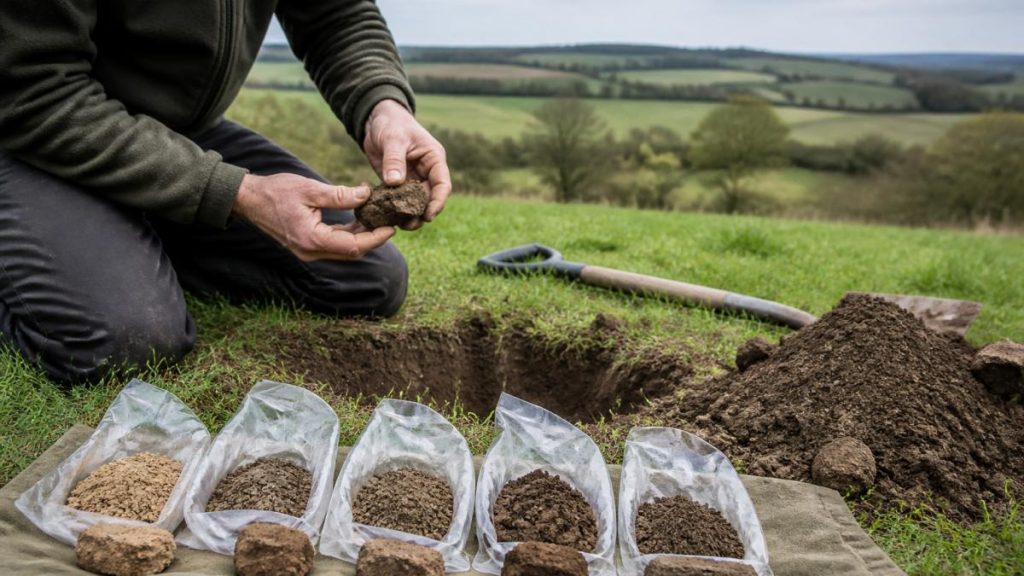
The quickest way to identify your garden soil type is the squeeze test. Pick up a handful of moist soil and squeeze it. If it holds a tight ball that feels sticky, you have clay. If it crumbles and feels gritty, you have sand or chalk. If it holds together but breaks apart easily, you have loam.
Do this in a few spots. Soil changes across a garden more than most people expect.
The Jar Test and the Ribbon Test
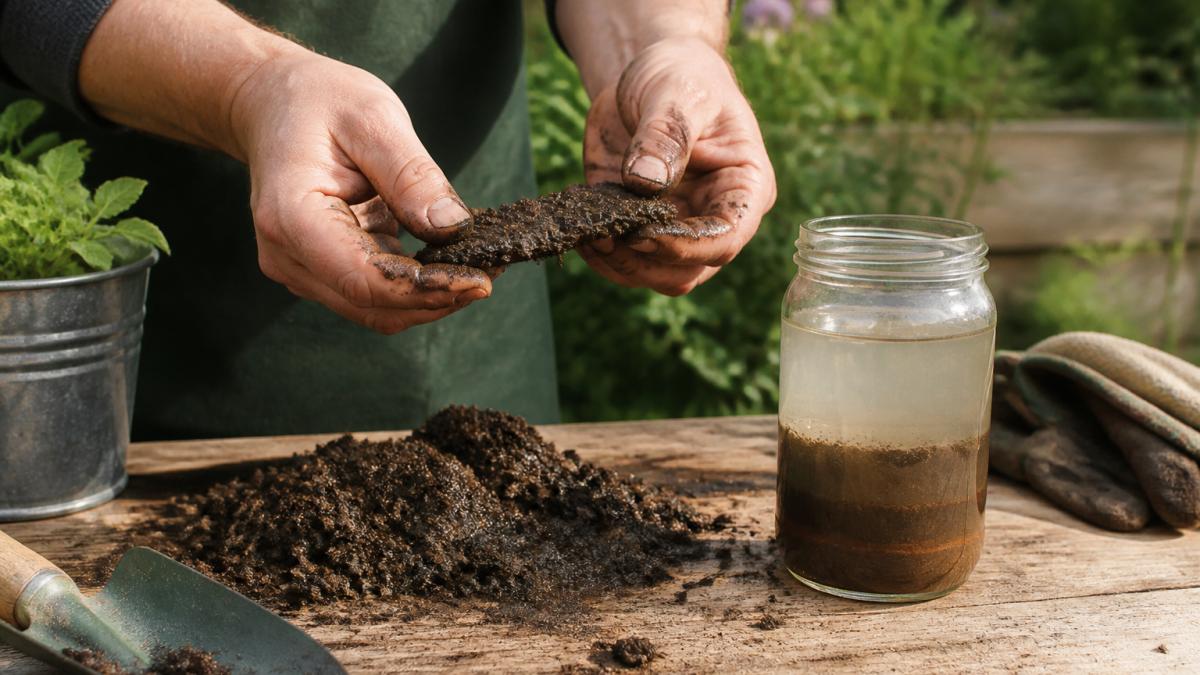
The jar test shows you the exact make-up of your soil. Fill a clear jar one-third with soil, top it up with water, add a drop of washing-up liquid, and shake hard. Leave it to settle for a day.
The layers tell the story:
- Sand settles at the bottom first
- Silt lands in the middle
- Clay floats on top, taking longest to drop
The ribbon test is faster. Roll a moist ball of soil between your palms into a thin ribbon. A long ribbon that holds means lots of clay. A short one that snaps means sand or chalk.
Test soil when it is moist but not soaking. Dry soil crumbles and wet soil smears, so both give you a false reading. A day after rain is ideal.
How Clay Soil Affects Plant Health
Clay soil is the most common complaint we hear. It holds onto water and nutrients, which sounds good until you see the downsides.
The problems show up fast:
- Water sits in winter and drowns roots
- The surface bakes hard in summer, blocking air
- Roots struggle to push through compacted ground
- New plants rot before they establish
But clay is not the enemy. It is packed with nutrients that sandy soil loses. Fix the structure and clay becomes some of the richest growing ground you can have.
The trick is to work with it, not fight it. Add organic matter, keep off it when wet, and choose plants that cope with a slow drain.
How to Improve Clay Soil in Your Garden
You improve clay soil by adding organic matter, not sand. This is the mistake we see most. Digging sand into clay makes it harder, like concrete.
Here is what actually works:
- Spread compost on the surface each autumn and let worms pull it down
- Add well-rotted manure to open up the structure
- Mulch beds to stop the surface baking
- Plant green manure such as field beans over winter
- Avoid walking on wet beds, which crushes the air out
It takes time. A single season of compost will help, but two or three years transforms heavy ground.
Never dig sand into clay soil. The two combine into a brick-like mix that drains worse than the clay alone and is far harder to fix.
Raised beds are the shortcut. Fill them with a good loam-based mix and you can grow almost anything while the ground beneath slowly improves.
Plants for Chalky Soil: What Thrives on Alkaline Ground
Plants for chalky soil need to cope with fast drainage and high lime. The good news is that plenty of beautiful plants love these conditions.
Chalk drains quickly and dries out in summer. It also locks away certain nutrients, so acid-lovers like rhododendrons and camellias will always struggle.
What thrives instead:
- Lavender and rosemary for scent and bees
- Bees’ and butterflies’ favourites like scabious and knapweed
- Hellebores for winter colour
- Sea holly and thyme for dry borders
- Field maple and hawthorn for structure
The Wildlife Trusts’ gardening advice points out that chalk grassland is one of the richest habitats in the country. Your chalky border can echo that.
Feed little and often. Chalk soil loses nutrients fast, so a light mulch each spring does more than one heavy dose.
Soil Health for Wildflowers: Building a Pollinator-Friendly Patch
Soil health for wildflowers is different from soil health for a border. Wildflowers want poor ground. Rich soil grows tall grass that crowds them out.
This surprises most people. If you want a wildflower patch, do not feed it.
Here is how we build one:
- Strip the topsoil or sow onto existing poor ground
- Avoid fertiliser and rich compost completely
- Choose native seed suited to your soil type
- Cut once a year, in late summer, and remove the clippings
- Be patient: year one looks sparse, year three is glorious
Removing clippings matters. Leaving them feeds the soil and the grasses take over.
Wildflowers thrive on poor soil and struggle on rich soil. If your patch is too fertile, the fix is to remove nutrients, not add them.
At TLC Gardening, pollinator planting and wildflower creation are two of our specialisms. We time our maintenance around local wildlife, so bees and butterflies get the flowers they need without the patch looking untended.
When to Call in Professional Help
Some soil problems are too big for a weekend of digging. A few signs tell you it is time to bring in help.
Call a professional if:
- Water sits on the surface for days after rain
- Lawns stay patchy no matter what you try
- You cannot work out what soil type you have
- A large area needs clearing, improving, or replanting
- You want a wildflower patch but do not know where to start
Diagnosing the problem is half the battle. A trained eye spots compaction, drainage, and nutrient issues in minutes.
TLC Gardening offers regular slots and one-off visits. So whether you need a seasonal clean-up or ongoing care, we can fit around you. As a family-run business, we keep our service personal and reliable.
Conclusion: Working With Your Soil, Not Against It
Every garden has its own character, and the soil sets it. Fighting clay with sand, or feeding chalk like it is loam, only wastes your time.
The better path is to know your ground and work with it. Test it, improve it slowly, and pick plants that suit it. That is how healthy gardens last.
If you would rather hand the job to someone who knows Oxfordshire soil inside out, we can help. TLC Gardening offers expert advice, pollinator-friendly planting, and reliable maintenance timed around local wildlife. We keep gardens looking their best without the guesswork.
Get a quote from TLC Gardening and let us handle the hard part.
Frequently Asked Questions
What soil types are found in Oxfordshire?
Oxfordshire sits on a mix of heavy clay, chalky downland soil, and loamy river-valley ground. The clay belt around the north and west holds water and drains slowly, while the chalk hills to the south and east are free-draining and alkaline. Many gardens fall somewhere between these, so a quick jar test tells you which one you are actually working with before you buy plants or amendments.
What plants grow well in chalky soil?
Chalky, alkaline ground suits plants that tolerate free drainage and higher pH. Lavender, rosemary, thyme, bearded iris, hardy geraniums, and scabious all settle in well. For structure, try field maple or hornbeam. Avoid acid-lovers such as rhododendrons, camellias, and blueberries unless you grow them in containers with ericaceous compost, because chalk locks away the iron they need.
How can I improve heavy clay soil in a garden?
Spread 5 to 8cm of well-rotted organic matter over the surface each autumn and let worms pull it down, rather than digging it in deeply. Add grit to beds that waterlog. Avoid working clay when it is wet, as this compacts it further. It takes two to three seasons of annual mulching before drainage and structure noticeably improve, so treat it as a routine rather than a one-off fix.
What is the best soil for wildflowers?
Wildflowers want the opposite of a rich bed. Low-fertility soil keeps grasses from swamping the flowers, so on improved garden ground you may need to strip the top layer or mix in sand and subsoil. Native mixes such as oxeye daisy, knapweed, and yellow rattle work well. Yellow rattle is especially useful because it weakens grass, giving flowering species room to establish.