
Table of Contents
- Why Your Lawn Goes Patchy in Oxfordshire
- How to Diagnose Bare and Thin Patches Before You Treat Them
- Lawn Overseeding Tips for Thicker Grass
- How to Remove Moss from Lawn Without Killing the Grass
- Building a Lawn Fertiliser Schedule That Suits Your Soil
- When to Repair and When to Call in Professional Lawn Care
- Frequently Asked Questions
Last Updated: September 24, 2026
Why Your Lawn Goes Patchy in Oxfordshire
Patchy grass rarely appears overnight, and patchy grass is rarely down to one single cause. According to [Royal Horticultural Society guidance on lawn care(/services/) | rhs.org.uk], most bare and thin patches trace back to a handful of causes: shade, compacted soil, moss, and mower damage. This guide from TLC Gardening covers how to find the real cause and fix it properly.
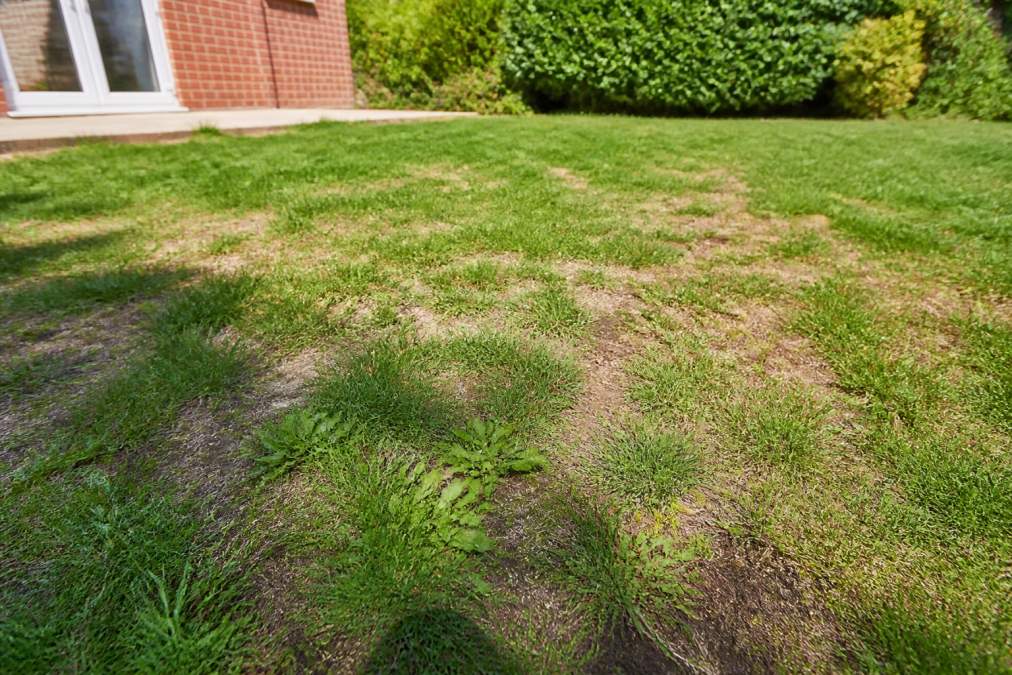
A patchy lawn is grass that grows unevenly, leaving bare soil, thin turf, or moss where thick green growth should be. In Oxfordshire, heavy clay soil and damp winters make this a common problem.
The good news: most patches are fixable. The 5 steps below cover diagnosis, overseeding, moss removal, feeding, and when to bring in help.
But first, here’s what most guides get wrong. They tell you to throw seed at the problem. Seed on compacted, mossy ground fails almost every time.
The Usual Suspects: Shade, Clay, Compaction and Moss
Four problems cause most patchy lawns in this region.
- Shade: Trees and fences block light. Grass thins out and moss moves in.
- Clay soil: Water sits on top, roots suffocate, and the surface turns rock-hard in summer.
- Compaction: Foot traffic and mower wheels squeeze the soil. Roots can’t spread.
- Moss: A symptom, not the cause. Moss thrives where grass is weak.
Fix the cause first. Otherwise, every repair you make will fail within a season.
How to Diagnose Bare and Thin Patches Before You Treat Them
Diagnosis takes fifteen minutes and saves you a wasted season. Dig up a small square of turf from the worst patch and look at what sits beneath it.
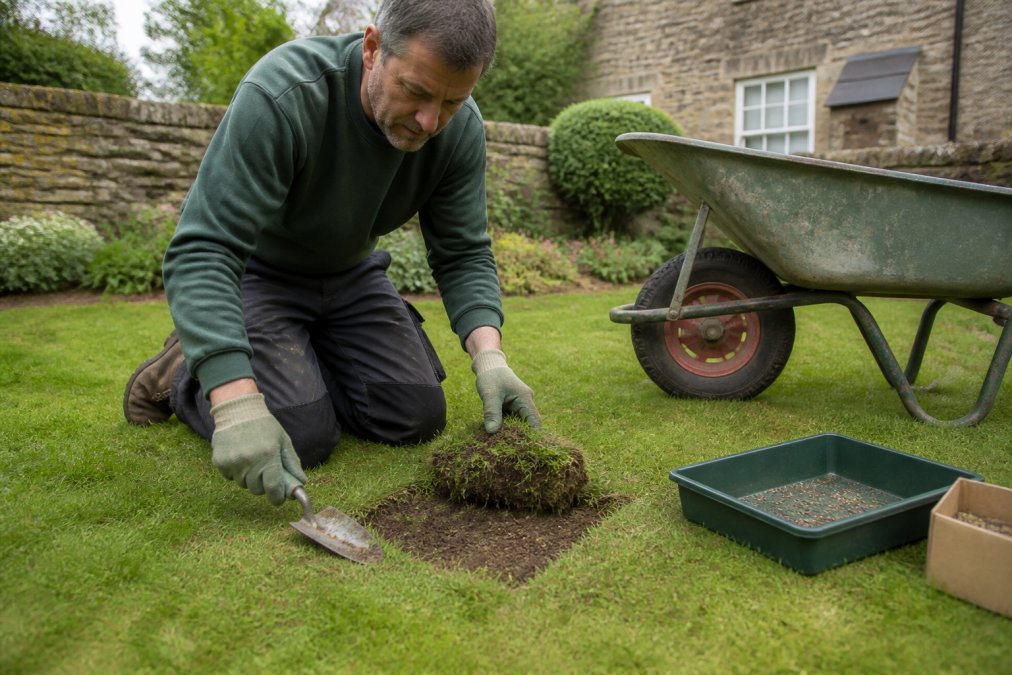
A Simple Patch Test: Dig, Feel, Drain
Run this three-part test on each problem area.
- Dig: Cut a 10cm square of turf with a trowel and lift it.
- Feel: Squeeze the soil. Sticky and smooth means clay. Crumbly means sand or loam.
- Drain: Fill the hole with water. If it still sits there after an hour, drainage is poor.
Now check the light. Watch the patch across a full day. Under four hours of direct sun points to a shade problem, not a soil one.
Water the hole test in the morning, not after rain. Dry soil shows the true drainage rate, and that is the number that matters.
Lawn Overseeding Tips for Thicker Grass
Overseeding works best in early autumn, when soil stays warm but the air cools. For most lawns, that means September through mid-October.
Follow these lawn overseeding tips for the best results:
- Mow low first, then scarify to clear thatch
- Aerate with a fork or hollow tine to open the soil
- Choose seed matched to your light levels, not just the cheapest bag
- Spread at the rate on the packet, then rake lightly
- Water gently and keep the surface damp for two to three weeks
Avoid seeding in midsummer. New grass dries out before roots establish.
Seeding straight onto moss or compacted clay wastes both seed and money. The new grass fails within weeks because the roots never reach proper soil.
How to Remove Moss from Lawn Without Killing the Grass
Moss removal works in two stages: kill it, then remove it. Skipping the second stage leaves dead moss that smothers new growth.
To remove moss from a lawn safely:
- Apply a moss control product when the lawn is dry and rain is not due.
- Wait for the moss to blacken, usually one to two weeks.
- Scarify or rake it out firmly.
- Aerate the bare ground and overseed.
Moss returns wherever grass stays weak. Fix the shade, drainage, or feeding problem, or you will repeat this job every spring.
Building a Lawn Fertiliser Schedule That Suits Your Soil
A lawn fertiliser schedule is the pattern of feeding your grass through the year, matched to the seasons and your soil type. Get the timing right and the grass out-competes moss and weeds.
For clay soils, feed little and often. Heavy doses wash straight off the surface.
| Season | Job | Why It Matters |
|---|---|---|
| Spring | Light feed, high nitrogen | Kick-starts growth after winter |
| Early summer | Balanced feed | Keeps colour through dry spells |
| Autumn | Low nitrogen, high potassium | Hardens grass for winter |
| Winter | No feed | Growth stops; feeding wastes money |
Test your soil every few years. A simple pH kit tells you whether to add lime or leave it alone.
Match feeding to your soil type, not the calendar alone. Clay lawns need lighter, more frequent doses than sandy ones.
When to Repair and When to Call in Professional Lawn Care
DIY repair suits small patches with an obvious cause. Call in professional lawn care when the problem is widespread, repeated, or unclear.
Bring in help if:
- More than a third of the lawn is bare or mossy
- Patches return every year despite treatment
- Drainage or shade problems need bigger work
- You lack the time to water new seed daily
At TLC Gardening, we diagnose the cause before quoting any work. As a family-run business, we offer regular slots or one-off visits, and we time our maintenance around local wildlife. Our pollinator-friendly approach means your lawn and borders can support bees and butterflies without looking neglected.
Pricing depends on lawn size, condition, and visit frequency. Get a quote for a figure based on your garden.
Frequently Asked Questions
What causes patches in a lawn?
Patchy grass usually comes from a mix of shade, compacted soil, moss, drought stress or pet damage. In Oxfordshire, heavy clay soils and damp winters make moss a common culprit. Once moss dies back in spring, it leaves brown patches. Other causes include mower scalping, spilled fertiliser and chafer grubs. Check the soil first: if it is hard and compacted, aerate before overseeding. If it is mossy, remove the moss, then improve drainage and light. Fixing the cause stops patches returning.
When is the best time to reseed a lawn?
Early autumn (September to mid-October) is the best window for overseeding in the UK. Soil is still warm from summer, air temperatures are cooler, and autumn rain keeps seed moist. Spring (late March to May) works as a second option, but you will need to water more often if the weather turns dry. Avoid sowing in summer heat or waterlogged winter soil. For lawn overseeding tips, always check the forecast: a week of mild, damp weather after sowing gives the best germination.
How do I prepare soil for overseeding?
Start by cutting the grass shorter than usual, around 25mm, and scarifying to remove thatch and moss. Aerate compacted areas with a fork or hollow-tine aerator. Spread a thin layer of top dressing (a sandy loam mix) over bare patches and work it into the surface. Firm the soil gently, then broadcast seed at the rate on the packet, typically 15-25g per square metre for overseeding. Rake lightly so seed sits in contact with soil, then water. Keep the surface moist until seedlings reach about 5cm.
Can I fix patchy grass without digging up the lawn?
Yes, most patchy lawns can be repaired without full renovation. Overseeding directly into thin areas, combined with scarifying, aerating and top dressing, thickens grass over time. Remove moss first so seed can reach the soil. If patches are deeper than 5cm or the soil is badly compacted, a localised dig and reseed of those spots works better. For large areas of dead grass, a full renovation may be quicker, but for typical Oxfordshire lawns, overseeding and a lawn fertiliser schedule will restore density within one or two seasons.
Patchy grass will keep coming back until you treat the cause, not just the symptoms. TLC Gardening can take that off your plate, from diagnosis and overseeding to a feeding plan built around your soil. With regular slots, pollinator-friendly methods, and expert advice on hand, you get a lawn that looks its best without the guesswork. Get a quote from TLC Gardening and let a local team handle the hard part.