
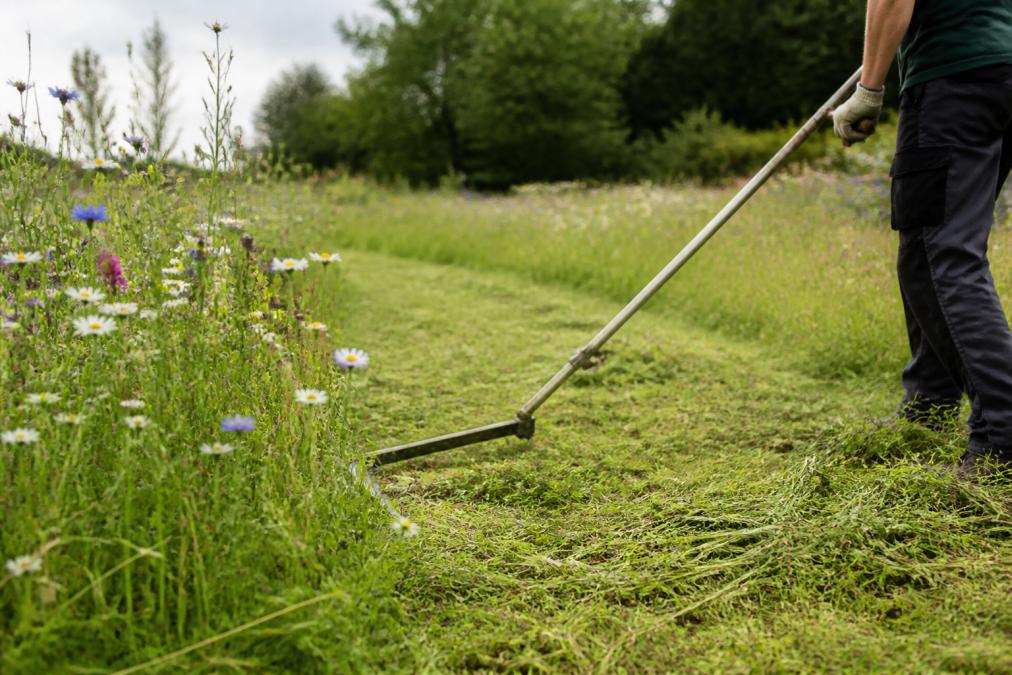
Table of Contents
- What You’ll Need Before You Start
- Step 1: Establish a Wildflower Meadow Mowing Schedule
- Step 2: Choose the Best Tools for Wildflower Meadow Maintenance
- Step 3: How to Manage Weeds in Wildflower Meadows
- Step 4: Creating Paths in Wildflower Gardens
- Common Mistakes That Make Wildflower Meadows Look Messy
- Keeping Your Tidy Wildflower Meadows Looking Their Best Year-Round
- Frequently Asked Questions
Last Updated: September 27, 2026
What You’ll Need Before You Start
Maintaining tidy wildflower meadows starts with the right kit and a clear plan. Wildflower meadows are patches of grass and native flowers left to grow long, then cut back at set times to keep them looking cared for rather than abandoned. This guide from TLC Gardening walks you through the full year of care, step by step.
Gather these before your first cut:
- Strimmer or brushcutter for long grass
- Sharp hand shears for edges
- Grass rake or hay rake
- Tarpaulin for collecting clippings
- Gardening gloves and eye protection
- Wheelbarrow for moving cut material
You will also need to know your meadow’s rough size and when it last flowered. That timing shapes everything else.
Step 1: Establish a Wildflower Meadow Mowing Schedule
A wildflower meadow mowing schedule is the single biggest factor in how tidy your meadow looks. Get the timing right and the space stays healthy and neat. Get it wrong and you end up with rank, flopping grass that looks neglected.
Most meadows need two main cuts a year:
- Late summer cut (July to September) after flowers set seed
- Autumn tidy cut (October to November) to shorten regrowth
- Optional spring trim (March) if growth starts early
The exact dates shift with your local climate and which flowers you have. Watch your meadow, not the calendar.
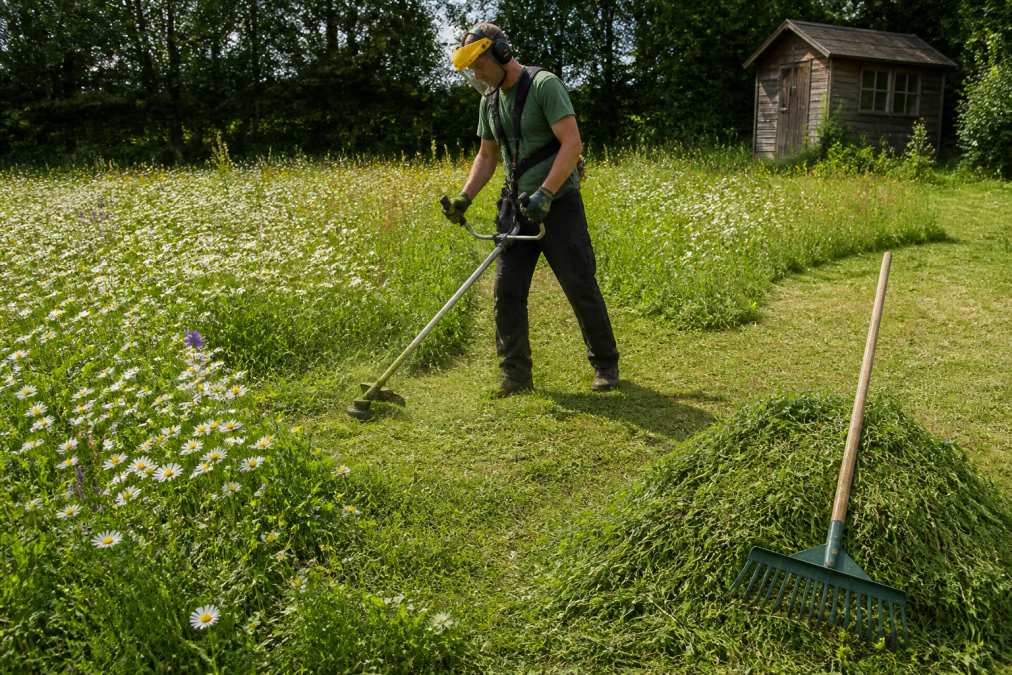
Timing Your Cuts Around Local Wildlife
Wildlife should guide your timing. Cutting too early removes nectar before bees and butterflies have finished feeding. Cutting too late lets seed drop, which is good, but leaves a scruffy patch through winter.
A common approach is to cut in sections rather than all at once. This leaves refuge areas for insects and small mammals. At TLC Gardening, we time cuts with local wildlife in mind.
Dealing with Clippings After Each Cut
Always remove clippings. This is the part most people skip, and it is why their meadow turns into a thick mat of grass.
Leaving clippings smothers wildflowers and feeds the soil, which only helps the grasses. Rake them onto a tarpaulin and move them to a compost heap. Two or three days of raking is normal for a medium meadow.
Leaving clippings on the meadow for more than a week kills the wildflowers underneath and encourages coarse grasses. Clear them within a few days of cutting.
Step 2: Choose the Best Tools for Wildflower Meadow Maintenance
The best tools for wildflower meadow maintenance balance cutting power with control. You do not need expensive kit, but the wrong tool makes the job twice as hard.
| Tool | Best For | Notes |
|---|---|---|
| Strimmer | Long grass, large areas | Fast, but leaves uneven finish |
| Brushcutter | Tough stems, brambles | Heavier, needs strength |
| Hand shears | Edges, small patches | Slow but precise |
| Hay rake | Gathering clippings | Essential for tidy results |
| Scythe | Traditional look, quiet work | Needs technique |
For most home meadows, a strimmer plus a good rake covers everything. Set the cutting height to around 5-10 cm so you do not scalp the ground.
Cut on a dry day and let the grass wilt for a few hours before raking. Wilted grass is lighter and easier to move, which halves your raking time.
Step 3: How to Manage Weeds in Wildflower Meadows
Learning how to manage weeds in wildflower meadows means knowing which plants to remove and which to leave. Not every strong grower is a problem. Some are just vigorous wildflowers.
The real troublemakers are species that outcompete everything else:
- Dock and thistle, which spread fast and dominate
- Ragwort, which needs careful handling
- Coarse grasses like rye, which smother flowers
- Bracken and bramble in larger plots
Remove these by hand where you can. Dig out the roots, not just the tops. For larger infestations, cut before they set seed to stop the spread.
Spotting Problem Species Early
Walk your meadow every few weeks through spring and summer. Early spotting saves months of work later.
Look for plants that are taller, denser, or spreading faster than the rest. Mark them and deal with them before they seed. This is far easier than fighting a full invasion the next year.
Step 4: Creating Paths in Wildflower Gardens
Creating paths in wildflower gardens is what turns a rough patch into a space that looks intentional. A simple mown path shows the meadow is managed, not forgotten.
Here is a straightforward approach:
- Decide your route through the meadow
- Mark the line with pegs or string
- Mow the path every 3-4 weeks through the growing season
- Keep the path width consistent, around 60-90 cm
- Edge the sides with shears for a crisp line
A regularly mown path also gives you access to cut the rest of the meadow. It is practical and it looks smart.
A mown path is the fastest way to make a wildflower meadow look tidy. It signals care without removing any of the flowers.
Common Mistakes That Make Wildflower Meadows Look Messy
Most messy meadows fail for the same handful of reasons. Fix these and the space looks after itself.
- Cutting everything at once and leaving bare ground
- Never removing clippings, so grass takes over
- Cutting too early and losing the flowers
- Letting edges grow ragged with no definition
- Ignoring weeds until they have seeded
The biggest one is skipping the autumn tidy. A short cut before winter keeps the meadow looking sharp and ready for spring.
Keeping Your Tidy Wildflower Meadows Looking Their Best Year-Round
Tidy wildflower meadows need a light touch through the year, not constant work. A quick walk-through each month keeps you ahead of problems.
Season by season:
- Spring: spot weeds, trim early growth if needed
- Summer: let flowers bloom, keep paths mown
- Autumn: main cut, clear clippings, tidy edges
- Winter: leave it be, plan next year’s cuts
This rhythm keeps the meadow healthy and neat without much effort. For busy homeowners who want this handled properly, TLC Gardening offers regular slots or one-off visits across the area. Our team specialises in pollinator-friendly and wildflower creation, so your meadow supports local bees and butterflies.
A wildflower meadow that looks cared for takes planning, not hard labour. The trick is timing your cuts, clearing clippings, and keeping paths and edges sharp through the year. If that sounds like more time than you have, TLC Gardening can take it on. As a family-run business, we offer regular maintenance timed with local wildlife in mind, plus expert advice on garden maintenance and reliable care that keeps your garden looking its best. Get a Quote and let us keep your meadow tidy all year round.
Frequently Asked Questions
When is the best time to cut a wildflower meadow?
The main cut should happen in late summer or early autumn, typically from late August to mid-September, once most wildflowers have set seed and dropped them. This gives the meadow time to regenerate before winter. If you want a second cut, do it in early spring before new growth starts. Avoid cutting during peak flowering season between May and July, as this removes food sources for bees and butterflies and weakens the wildflower plants.
How do you keep a wildflower meadow looking tidy without killing the flowers?
The key is timing and edges. Cut the main meadow area once a year in late summer, then keep the edges and any paths mown regularly throughout the growing season. This creates a clear, manicured border that frames the wildflower area. Remove all clippings after cutting to prevent thatch buildup and nutrient enrichment, which encourages coarse grasses. A well-defined edge and clean paths make even a naturalistic meadow look intentional and cared for.
Should I remove the clippings after mowing a wildflower meadow?
Yes, always remove clippings. Leaving them smothers the wildflower seedlings underneath and adds nutrients to the soil, which benefits aggressive grasses at the expense of wildflowers. Wildflower meadows thrive on low-fertility soil. Rake up clippings and add them to your compost heap or use them as mulch around shrubs. This single step makes the biggest difference between a species-rich meadow and a patch of rank grass.
How do I stop my wildflower meadow from looking messy?
Focus on three things: clear edges, defined paths, and a late-summer cut. Use a half-moon edger or spade to create a crisp boundary between the meadow and lawn or borders. Cut paths through the meadow at least twice during the growing season so you can walk through without trampling stems. After the main annual cut, the meadow will look short and tidy going into autumn. A little structure around the wild area changes how the whole garden reads.