
Table of Contents
- Why Garden Biodiversity Matters
- Plants for Pollinators: Building the Foundation
- How to Create a Wildflower Meadow
- Garden Habitats for Wildlife: Structures and Features
- Wildlife-Friendly Garden Ideas You Can Implement Now
- Maintaining Biodiversity Without Neglecting Your Garden
- Common Mistakes That Harm Garden Biodiversity
- Conclusion: Start Small, Think Big
- Frequently Asked Questions
Last Updated: October 11, 2026
Why Garden Biodiversity Matters
Garden biodiversity is the variety of plants, insects, birds, and other organisms that thrive in your outdoor space. A biodiverse garden isn’t just aesthetically richer, it’s more resilient, requires less intervention, and creates a thriving ecosystem on your doorstep. When you improve garden biodiversity, you’re building something that works with nature rather than against it.
At TLC Gardening, we understand how gardens transform when biodiversity becomes the priority. Spaces that were once sterile monocultures can buzz with life. Pollinators can return. Pest populations can balance themselves naturally. The garden can stop feeling like a chore and start feeling like a living system you’re part of.
The real benefit isn’t just environmental. A biodiverse garden needs less chemical intervention, fewer manual fixes, and rewards you with colour and movement throughout the year. Native plants thrive because they’re adapted to local conditions. Beneficial insects control the pests you’d otherwise battle endlessly.
Start by observing what’s already in your garden. The insects, birds, and plants already present are telling you what your space naturally supports. Build from there rather than imposing a completely foreign ecosystem.
Plants for Pollinators: Building the Foundation
Your garden’s foundation rests on plants that attract and feed pollinators. Without bees, butterflies, and other pollinating insects, your garden stalls. These plants aren’t difficult to grow, they’re often tougher than the ornamentals you’ve been maintaining.
Choose native flowering plants that bloom across seasons. Spring brings hellebores and pulmonaria. Summer explodes with lavender, marjoram, and borage. Autumn sustains pollinators with asters and sedums. Winter clematis and mahonia keep the food chain alive when little else flowers.
Avoid double flowers, the fancy cultivars with extra petals look impressive but offer nothing to pollinators. A single bloom with visible stamens and pollen is what bees and butterflies actually need. Deadheading is optional here; leave spent flowers standing so insects can shelter in them.
Group plants by type rather than scattering singles. Pollinators work more efficiently when they can visit multiple blooms without flying far. A concentrated patch of lavender beats three isolated plants spread across the garden.
| Plant Type | Best Season | Why Pollinators Need It |
|---|---|---|
| Native wildflowers | Spring-summer | High nectar and pollen yield |
| Herbs (lavender, thyme, oregano) | Summer-autumn | Extended bloom periods |
| Sedums and grasses | Autumn-winter | Late-season food and shelter |
| Native shrubs | Variable | Structural support and nesting |
How to Create a Wildflower Meadow
Creating a wildflower meadow sounds romantic but requires realistic thinking. You’re not letting your lawn “go wild”, you’re replacing it with a managed ecosystem that looks intentional, not neglected. This distinction matters when you’re explaining it to neighbours.
Start small. A 2×3 metre patch teaches you what works before committing to larger areas. Prepare the soil by removing existing turf and the nutrient-rich topsoil beneath it.
Sow seed in autumn or early spring (How to Sow a Wildflower Patch). Scatter seed directly onto bare earth, press it in, and let winter do the work. Spring germination happens naturally.
Water during dry spells in the first year only. Once established, wildflower meadows need no feeding, no fertiliser, and no pesticides. Mow once yearly, in late summer after flowers have set seed (Wildflower meadow habitats).
The mistake most people make is adding “wildflower seed” to existing lawn. Vigorous grasses will strangle wildflower seedlings. You must remove the competition first. This is the hard part, but it’s non-negotiable.
Do not use wildflower seed mixes containing non-native ornamentals. They look pretty but offer little to local insects. Stick to native species appropriate for your region.
Garden Habitats for Wildlife: Structures and Features
Biodiversity needs shelter as much as it needs food. A garden with only flowers but nowhere to hide is incomplete. Structures and features create the microhabitats where wildlife actually lives.
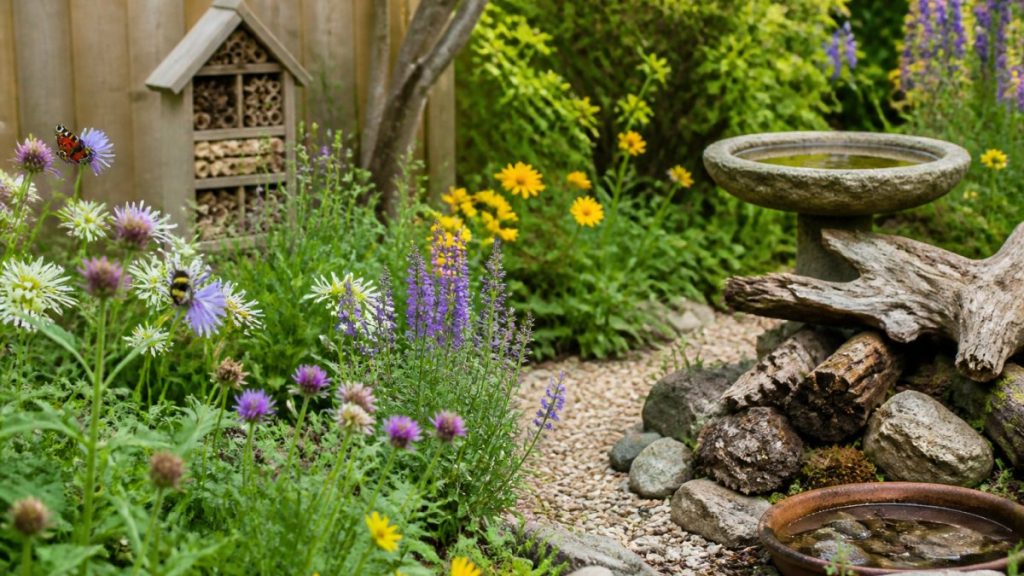
A wildlife pond doesn’t need to be large. Even a small container garden sunk into the ground becomes a breeding ground for frogs, newts, and aquatic insects. Add shallow edges so creatures can drink and escape.
Log piles rot slowly and create perfect conditions for beetles, spiders, and fungi. Stack logs in a shaded corner and leave them. Don’t tidy them up. The decay is the point.
Dead wood standing, a dead tree or branch left in place, offers nesting cavities for woodpeckers and shelter for insects.
Dense shrubs provide nesting sites for birds. Hawthorn, holly, and native hedging species are ideal. Thorny plants deter predators and offer protection during harsh weather.
A simple bird feeder and water source extend your garden’s appeal. Keep feeders clean and water fresh. Change position occasionally to prevent ground erosion from droppings.
Wildlife-Friendly Garden Ideas You Can Implement Now
You don’t need a complete garden overhaul to improve garden biodiversity. Start with one or two changes this season and build from there.
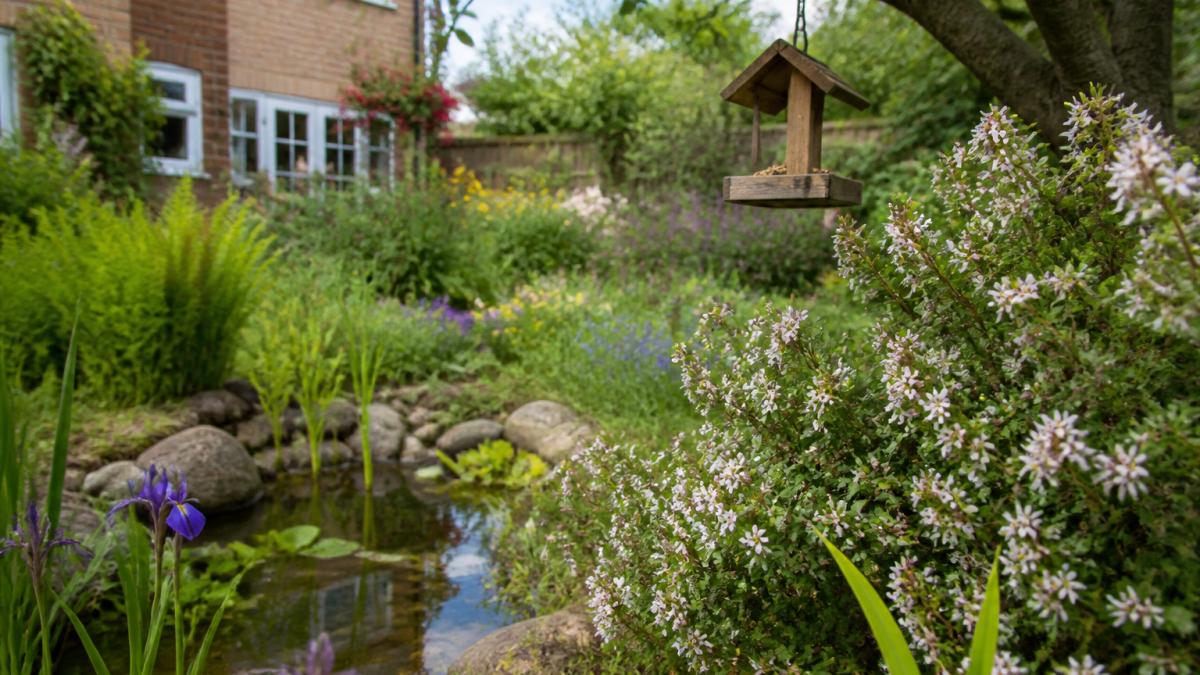
Plant a native hedgerow instead of a fence. It costs less, looks better, and provides food and shelter for years. Hawthorn, blackthorn, and native privet grow quickly and densely.
Install a bee hotel, a simple structure with hollow stems or drilled wood. Solitary bees nest in these and ask for nothing else. Position it in morning sun, sheltered from wind.
Leave areas unmown. A corner of long grass supports insects you’ll never see but that feed birds and pollinators.
Reduce paving and hard surfaces. Every square metre of gravel or concrete is space where nothing lives. Replace some with planting or leave it to moss and self-seeding plants.
Stop using pesticides entirely. Every spray kills the insects that form the bottom of the food chain. Slugs eating your plants are also food for hedgehogs, birds, and ground beetles.
The fastest wins come from stopping harmful practices rather than adding new ones. Stopping pesticides, stopping tidying, stopping the urge to control everything, these changes alone shift your garden toward biodiversity within one season.
Maintaining Biodiversity Without Neglecting Your Garden
The tension between a tidy garden and a biodiverse one is real. You can resolve it by changing what “tidy” means.
A biodiverse garden looks maintained, not wild. Paths are clear. Planting is structured. Deadheading happens, but selectively. You’re removing spent blooms from ornamental plants while leaving wildflower seed heads standing. You’re mowing the lawn but leaving rough patches.
Timing matters. Prune in late winter before nesting season. Cut hedges after birds have fledged in late summer. Leave seed heads standing through winter. Tidy in spring, not autumn, so creatures have shelter during cold months.
Work with TLC Gardening if your time is limited. We understand this balance and can help maintain gardens for pollinator-friendly results while keeping them looking intentional and well-cared-for. Regular maintenance timed with wildlife needs can mean your garden supports life without looking neglected.
Divide your garden into zones. The front or visible area can be more formal. The back or side spaces can be wilder. This gives you both aesthetics and ecology.
Common Mistakes That Harm Garden Biodiversity
The biggest mistake is starting with the wrong mindset. You can’t improve garden biodiversity by fighting nature. You improve it by stepping back and letting natural processes work.
Planting native species in isolation doesn’t work. One native plant surrounded by manicured lawn and chemical inputs won’t survive or thrive. Native plants need community, other natives, shelter, undisturbed soil, and freedom from pesticides.
Tidying too aggressively destroys the habitats you’re trying to build. Autumn leaf-clearing removes shelter and nesting material. Summer deadheading before seeds drop prevents plants from spreading naturally.
Overwatering native plants kills them. Once established, native species need minimal water. They’re adapted to local rainfall patterns. Extra water encourages soft growth that attracts pests and disease.
Adding non-native ornamentals to a native planting scheme confuses the ecosystem. Pollinators evolved with native plants. A showy exotic bloom offers nothing to a local bee.
Expecting instant results demoralises people. Year one is sparse. Year two shows improvement. Year three is when you see the real transformation. Gardens that improve biodiversity require patience.
The most common mistake is assuming your garden is “too small” to matter. Even a tiny courtyard garden can support pollinators, provide nesting sites, and contribute to local biodiversity. Scale doesn’t matter, intention does.
Conclusion: Start Small, Think Big
Improving garden biodiversity isn’t about creating a perfect ecosystem. It’s about removing barriers and letting natural processes work. Stop the pesticides. Stop the obsessive tidying. Plant things that feed local wildlife. Leave some mess. Watch what happens.
Your garden will surprise you. Insects will arrive. Birds will nest. Plants will seed themselves. The space will feel alive in ways a manicured lawn never does.
Frequently Asked Questions
How can I improve garden biodiversity without letting it become overgrown?
You can improve garden biodiversity while keeping your space neat by creating designated wildlife areas rather than letting everything grow wild. Plant pollinator-friendly flowers in borders, add a small water feature, and install bird boxes or log piles in corners. The rest of your garden can remain formally maintained. Regular cutting of wildflower areas once or twice yearly keeps them healthy and tidy-looking. Many homeowners find that a mix of cultivated beds and small wildlife zones gives the best balance of beauty and ecological benefit.
What plants are best for a wildlife-friendly garden?
Plants for pollinators should include native species like foxgloves, lavender, borage, and coneflowers, which attract bees and butterflies. Flowering shrubs such as hawthorn, rowan, and hazel provide food and shelter. Avoid double-flowered varieties, as these offer little nectar. Include plants that flower at different times of year to provide food from spring through autumn. Native wildflowers are ideal because local insects have evolved to use them. Choose a mix of heights and structures to create varied habitats within your garden.
How do I attract more pollinators to my garden?
Attract pollinators by planting nectar-rich flowers, avoiding pesticides, and providing water. Bees and butterflies need flowers that bloom throughout the growing season, so choose plants for pollinators with staggered flowering times. Leave some areas unmulched or with bare soil where solitary bees can nest. Provide shallow water dishes with pebbles for insects to drink safely. Avoid tidying everything in autumn; dead stems and leaf litter provide winter shelter. Reduce artificial lighting at night, as it disorients flying insects.
Can I improve garden biodiversity in a small garden?
Yes, even small gardens can support wildlife. Focus on quality over space: a small wildlife pond, a bird feeder, and a few well-chosen flowering plants make a real difference. Vertical gardening with climbing plants and wall-mounted planters maximises planting area. Add a log pile or bug hotel in a corner. Plant native species densely in containers or borders. Small gardens often attract more concentrated wildlife activity because resources are concentrated. Many urban and suburban gardens prove that size is not a barrier to improving biodiversity.
When should I cut back a wildlife-friendly garden?
Cut back wildflower areas once in late summer (August to September) after flowers have set seed, or once in early spring (February to March) if you prefer. Never cut in autumn or winter, as many insects overwinter in dead stems and leaf litter. For formal borders with wildlife plants, deadhead spent flowers to encourage more blooms, but leave some seed heads standing through winter. Avoid cutting hedges during nesting season (March to August). Spring is ideal for removing dead growth and preparing beds for new growth.
What features can I add to help garden wildlife?
Garden habitats for wildlife include water features (ponds or shallow bowls), bird feeders and boxes, hedgehog houses, log piles, bug hotels, and areas of long grass. Native shrubs and trees provide shelter and food. Bare soil patches allow ground-nesting bees to burrow. Climbing plants on fences or trellises create corridors for wildlife movement. Compost heaps attract insects and small mammals. Avoid hard landscaping that creates barriers; instead, leave gaps in fences for hedgehogs. Each feature increases the range of species your garden can support.
How can I create a wildflower meadow in my garden?
To create a wildflower meadow, start by preparing the soil: remove turf or kill existing grass with a contact herbicide, then scarify and rake the bare area. Sow wildflower seed in spring or autumn, choosing a mix suited to your soil type and light conditions. Water until established. In the first year, remove any strong-growing weeds by hand. Cut the meadow once yearly in late summer after flowers have seeded. If your soil is very fertile, remove topsoil first to reduce nitrogen, as wildflowers prefer poorer conditions. Even a small patch creates valuable habitat and looks attractive.
If garden maintenance feels like a burden rather than a pleasure, let TLC Gardening handle it. We specialise in pollinator-friendly gardens and wildflower creation across Oxford and Oxfordshire. Our team times maintenance with wildlife needs, ensuring your garden supports bees and butterflies while staying well-kept and beautiful. Get a Quote and discover how professional care transforms your outdoor space into a thriving ecosystem.