
Table of Contents
- What Determines How Often Gardeners Visit
- Building a Garden Maintenance Schedule That Works
- Fortnightly vs Monthly: Which Gardeners Visit Pattern Suits You
- Signs Your Garden Needs More Frequent Professional Attention
- The Cost of Regular Garden Maintenance and What Affects It
- Maintaining Garden Privacy and Security Between Visits
- Frequently Asked Questions
Last Updated: September 26, 2026
What Determines How Often Gardeners Visit
How often gardeners visit depends on garden size, plant types, growth rates, and the season. A small courtyard with low-maintenance shrubs may only need monthly attention, while a large plot with fast-growing borders and a fine lawn often needs a visit every week or fortnight during peak growing months.
At TLC Gardening, we plan visits around what each garden actually needs rather than a fixed one-size-fits-all rota.
Most homeowners ask how often should gardeners visit before they understand what drives the answer. Three things matter most: size, planting, and time of year.
Royal Horticultural Society guidance on seasonal garden care
Garden Size and Layout
Bigger gardens take longer to maintain, so visits need to be more frequent or longer. A compact town garden might take an hour to tidy. A large property with hedges, lawns, and multiple borders can take a full day or more.
Layout matters too. Narrow paths, steep slopes, and lots of separate beds slow the work down. Open lawns and simple borders are quicker to manage.
As a rough guide:
- Small garden under 50 square metres: monthly visits often suffice
- Medium garden 50-150 square metres: fortnightly during growing season
- Large garden over 150 square metres: weekly or fortnightly year-round
Plant Types and Growth Rates
What you grow decides how fast the garden gets messy. Fast growers need more attention.
- Lawns: Need cutting weekly in summer, monthly in winter
- Hedges: Formal hedges need trimming two to three times a year
- Perennials and shrubs: Deadheading and pruning vary by species
- Wildflower areas: Need timed cutting to support pollinators
- Vegetable beds: Weekly attention in the growing season
Pollinator-friendly planting changes the rhythm. Wildflower areas should not be cut while they are in flower, so timing matters more than frequency.
Building a Garden Maintenance Schedule That Works
A good garden maintenance schedule matches the work to the season. Spring and summer are the busiest months. Autumn and winter need fewer visits but still matter for next year’s growth.
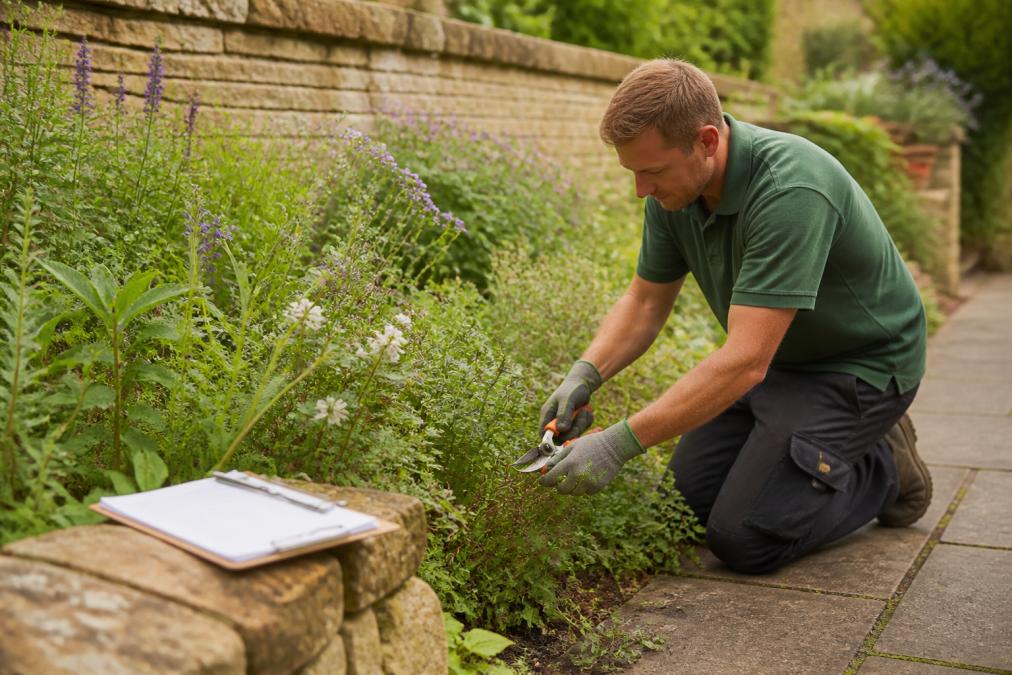
The trick is to plan ahead. A schedule that ignores the seasons leaves you playing catch-up every spring.
Spring and Summer: The Busy Months
Spring kicks off rapid growth. Weeds appear, lawns wake up, and everything needs cutting back or feeding.
Typical spring and summer tasks:
- Weekly lawn cutting from April to September
- Weeding borders every one to two weeks
- Deadheading flowers to keep blooms coming
- Watering during dry spells
- Trimming hedges once growth is underway
This is when fortnightly visits make the most sense for most gardens. Weekly visits suit larger plots or formal gardens.
Autumn and Winter: Slower but Still Important
Growth slows, but the work does not stop. Autumn is for clearing leaves, planting bulbs, and preparing beds for winter.
Winter jobs include:
- Pruning dormant shrubs and trees
- Clearing fallen leaves and debris
- Protecting tender plants from frost
- Planning next year’s planting
- Checking structures like fences and trellises
Monthly visits usually cover winter needs. Some gardens only need a couple of visits across the coldest months.
Book your spring and summer slots early. Good gardeners fill their diaries fast once growth starts, and regular clients get priority over one-off bookings.
Fortnightly vs Monthly: Which Gardeners Visit Pattern Suits You
Fortnightly visits suit most family gardens with lawns and mixed borders. Monthly visits work for smaller, low-maintenance plots or during slower seasons.
Here is how the two patterns compare:
| Visit Pattern | Best For | Typical Season | Main Benefit |
|---|---|---|---|
| Weekly | Large or formal gardens | April to September | Keeps everything sharp |
| Fortnightly | Most family gardens | March to October | Balances cost and results |
| Monthly | Small or low-maintenance plots | Year-round | Lower cost, steady care |
| Seasonal | One-off tidy-ups | Spring and autumn | Targeted big jobs |
If you are unsure, start with fortnightly during the growing season and drop to monthly in winter. That pattern covers the heavy growth months without paying for visits you do not need.
Signs Your Garden Needs More Frequent Professional Attention
Your garden will tell you when it needs more care. Watch for these signs:
- Weeds returning within days of being cleared
- Lawn looking shaggy between cuts
- Shrubs outgrowing their space
- Pests or disease spreading unchecked
- Borders looking crowded or overgrown
If you spot three or more of these, it is time to increase visit frequency. Catching problems early is cheaper than fixing them later.
Skipping visits during peak growth does not save money. Overgrown lawns and shrubs take longer to bring back, and the catch-up cost often outweighs the savings from missed visits.
The Cost of Regular Garden Maintenance and What Affects It
The cost of regular garden maintenance depends on garden size, visit frequency, and the tasks involved. Pricing varies from one property to the next.
Factors that affect cost:
- Garden size and complexity
- How often you want visits
- Which tasks are included
- Seasonal demands like leaf clearing
- Access, such as gates or narrow paths
Pricing varies from one property to the next. The best way to get an accurate figure is a quote based on your garden. TLC Gardening provides quotes tailored to each property, so you know exactly what you are paying for.
Maintaining Garden Privacy and Security Between Visits
Maintaining garden privacy and security between visits keeps your property safe and your garden looking its best. Regular care does more than tidy up. It also spots problems early.
Simple habits help:
- Trim hedges and shrubs to keep boundaries dense
- Check fences and gates after storms
- Keep paths clear and well lit
- Store tools and equipment securely
- Ask your gardener to flag anything unusual
A regular gardener becomes a second pair of eyes. They notice broken fences, blocked drains, or signs of damage before small issues become expensive ones.
The right visit frequency is the one that matches your garden’s growth and your budget. Fortnightly in the growing season and monthly in winter suits most homes.
Frequently Asked Questions
Is a fortnightly or monthly garden visit better?
Fortnightly visits suit most gardens from March to September, when grass grows quickly and borders need regular tidying. Monthly visits work well for low-maintenance gardens, smaller plots, or during the slower autumn and winter months. If your garden has fast-growing hedges, a large lawn, or lots of pollinator-friendly planting, fortnightly visits keep everything under control. A professional can assess your specific garden and recommend the right pattern.
What tasks are typically included in a regular garden maintenance visit?
A standard visit usually covers mowing and edging lawns, weeding borders and paths, deadheading flowers, pruning shrubs, and tidying hard surfaces. Seasonal tasks like hedge cutting, leaf clearing, and mulching are added at the right time of year. If you have wildflower areas or pollinator-friendly planting, the gardener will time cutting and maintenance around local wildlife needs. Regular visits also include a quick check for pests, diseases, and any damage that needs attention.
Does garden size affect how often gardeners visit?
Yes, garden size is one of the biggest factors. A small courtyard garden may only need a monthly visit, while a large property with multiple borders, hedges, and a big lawn often needs fortnightly attention during growing season. Larger gardens also take longer per visit, so the total time and cost increase even if the frequency stays the same. A professional assessment will confirm the right balance for your plot.
How can I tell if my garden needs more frequent professional attention?
Watch for lawns that need mowing more than once a fortnight, borders where weeds reappear within days, or shrubs that look overgrown between visits. If you are spending your own weekends catching up rather than enjoying the garden, that is a clear sign. Other indicators include patchy grass, pest damage spreading, and hedges losing their shape. Increasing visit frequency early prevents bigger, more expensive problems later.
Every garden has its own rhythm, and finding the right visit pattern takes local knowledge and consistency. TLC Gardening offers regular slots or one-off visits, with maintenance timed around local wildlife and pollinator-friendly planting. As a family-run team, we keep gardens across the area looking their best, with expert advice and reliable care you never have to chase. Get a quote from TLC Gardening and enjoy a garden that stays healthy, private, and full of life all year round.