

Table of Contents
- Why a Garden Maintenance Schedule Beats Ad-Hoc Gardening
- Your Monthly Garden Maintenance Schedule: The Core Routine
- The Seasonal Garden Maintenance Checklist for Each Quarter
- How Often Should a Gardener Visit? Working Out Your Frequency
- A One-Page Garden Maintenance Checklist You Can Actually Stick To
- Time-Saving Tips for Professionals With Limited Hours
- When to Bring In Professional Help (and What to Ask)
- Frequently Asked Questions
Last Updated: October 5, 2026
Why a Garden Maintenance Schedule Beats Ad-Hoc Gardening
A garden maintenance schedule is a written plan that sets out what needs doing, how often, and when across the year. Ad-hoc gardening fails because plants do not work to your calendar. Miss the spring feed and the lawn thins out by July. Skip the autumn cut-back and you are clearing soggy debris in January. A proper garden maintenance schedule for busy professionals solves this by removing the decision-making. You stop wondering what needs doing and simply follow the plan. Below, we break down a monthly and seasonal routine you can run in under an hour a week, plus the point at which hiring help makes more sense than struggling on.
Your Monthly Garden Maintenance Schedule: The Core Routine
The core routine is a short list of jobs that repeat every month, with a handful of quarterly extras layered on top. Most of it takes 30 to 60 minutes in a small to medium garden. The trick is doing the same jobs in the same order each time, so nothing gets forgotten.
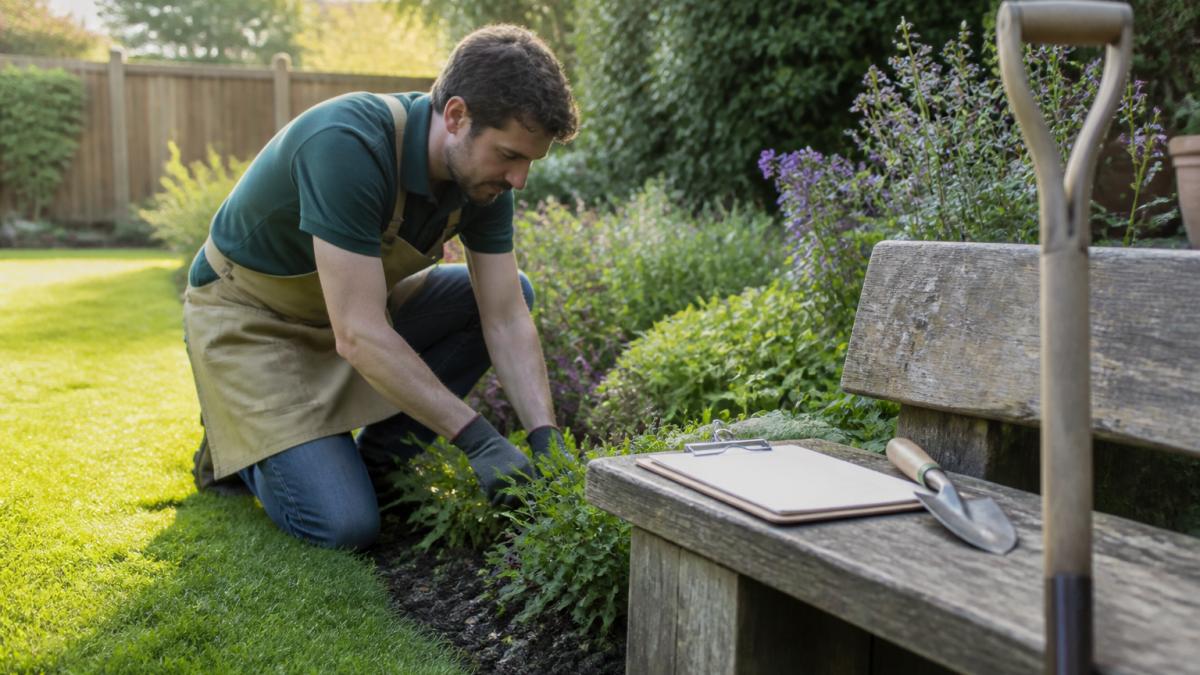
Every month, set aside one slot and work through this:
- Clear fallen leaves, weeds and dead flower heads
- Check plants for pests and disease, and deal with problems early
- Water containers and any new planting, even in a wet spell
- Mow the lawn when it is growing, raising the cut height in dry weeks
- Trim anything that has grown out of shape
What to Do Every Month, Every Quarter
Quarterly jobs sit on top of the monthly list. They are the ones people forget, and they are usually the ones that matter most.
- Every quarter: feed beds and borders, edge the lawn, check supports and ties
- Twice a year: service tools, clear gutters and drains near planting
- Once a year: prune the big shrubs, mulch beds, plan next year’s planting
Photograph your garden at the start of each quarter. Comparing photos six weeks apart shows you what is actually growing and what is quietly dying, which is hard to spot in a garden you walk past daily.
The Seasonal Garden Maintenance Checklist for Each Quarter
A seasonal garden maintenance checklist splits the year into four blocks and gives each one a clear focus. It keeps the heavy work in the seasons that suit it, rather than fighting the weather.
| Season | Main Focus | Key Jobs | Time Needed |
|---|---|---|---|
| Spring | Growth and feeding | Feed beds, reseed bare patches, start mowing weekly | 2-3 hours |
| Summer | Watering and upkeep | Water deeply, deadhead, trim hedges | 2-3 hours |
| Autumn | Clearing and planting | Clear leaves, plant bulbs, cut back perennials | 3-4 hours |
| Winter | Structure and planning | Prune shrubs, mulch, sharpen and service tools | 2-3 hours |
Spring and Summer Priorities
Spring is about waking the garden up. Start feeding as growth begins, reseed any bare lawn patches, and move to weekly mowing. Summer is about holding the line. Water deeply rather than little and often, deadhead flowers to keep them coming, and keep hedges trimmed before they get woody. The biggest mistake is overwatering in small doses. A deep soak twice a week beats a light sprinkle every day.
Autumn and Winter Priorities
Autumn is the busiest season and the one that sets up next year. Clear leaves before they smother the lawn, plant spring bulbs, and cut back perennials as they die down. Winter is quieter, which makes it the right time for structure: pruning dormant shrubs, spreading mulch, and servicing tools so they are ready in spring. Get autumn right and spring becomes far easier.
How Often Should a Gardener Visit? Working Out Your Frequency
A gardener should visit every two weeks for most domestic gardens, moving to weekly during peak growing season. That is the honest answer for a garden you want kept neat. If your garden is low-maintenance, with mostly shrubs and gravel, once every three to four weeks can work.
Use these rough guides to decide:
- Small, simple garden: every 3 to 4 weeks
- Medium garden with lawn and borders: every 2 weeks
- Large garden or heavy planting: weekly in growing season
- Letting or rental property: every 2 weeks, year-round
Think about the growing season, not the calendar year. From roughly March to October, growth is fast and visits need to be closer together. In winter, you can stretch the gap.
Booking a gardener only when the garden looks bad means you are always paying for catch-up work. Regular slots keep the cost steady and stop small problems becoming expensive ones.
A One-Page Garden Maintenance Checklist You Can Actually Stick To
A one-page checklist works because it fits on the fridge and takes ten seconds to read. Keep it to four columns and tick as you go.
- Weekly: water containers, deadhead, quick weed of paths
- Fortnightly: mow, edge, trim, tidy borders
- Monthly: feed, check for pests, clear debris
- Quarterly: prune, mulch, service tools, review the plan
- Seasonal: spring feed, summer water, autumn clear, winter prune
Print it, stick it somewhere visible, and mark the date each time you finish. A checklist you actually use beats a perfect plan you never open.
Time-Saving Tips for Professionals With Limited Hours
Busy professionals save the most time by batching jobs and choosing low-effort planting. If you have an hour a week, spend it on the jobs that keep everything else under control.
- Mow and edge in one session, not two
- Water deeply twice a week instead of daily
- Choose shrubs and perennials over bedding plants
- Mulch beds to cut weeding by a large margin
- Keep tools in one place so setup takes seconds
- Do the big jobs in one seasonal block, not spread thin
The single biggest time-saver is mulch. A good layer over beds holds moisture and smothers weeds, which removes two of your most repeated jobs. For anyone short on hours, it pays for itself quickly.
If you only do three things, do these: mow regularly, water deeply, and mulch. Those three cover most of what keeps a garden looking cared for.
When to Bring In Professional Help (and What to Ask)
Bring in professional help when the garden needs more hours than you have, or when a specific problem keeps coming back. Patchy lawns, persistent weeds and overgrown shrubs are the usual triggers. A general maintenance service can handle routine work, but you want someone who can also diagnose why the lawn is thin rather than just cutting it.
Ask these questions before you commit:
- How often would you visit, and can you hold a regular slot?
- Do you handle one-off seasonal clean-ups as well as regular work?
- Can you advise on pollinator-friendly planting and wildflowers?
- How do you handle problems or complaints?
- Are you insured, and who exactly will be doing the work?
This is where a family-run local team has an edge. At TLC Gardening, we time our maintenance around local wildlife, so pollinator planting and wildflower areas stay neat without losing their value to bees and butterflies. We offer regular slots or one-off visits, and we cover properties across Oxford and Oxfordshire, from small gardens to larger estates and rental portfolios.
If you are weighing up whether to DIY or delegate, our advice is simple: if the garden is a source of stress rather than enjoyment, hand it over.
Most people do not lack the will to keep a garden tidy. They lack the hours. That is exactly the gap TLC Gardening fills, with reliable regular slots, one-off seasonal clean-ups, and expert advice on everything from patchy lawns to pollinator-friendly planting. As a family-run team, we turn garden upkeep from a chore into something you never have to think about. Get a quote from TLC Gardening and keep your garden looking its best all year, with a schedule built around your time and your local wildlife.
Frequently Asked Questions
How often should a gardener visit a busy professional’s garden?
For most gardens, a fortnightly visit keeps things under control without you lifting a finger. If your garden is large, has extensive lawns or lots of hedges, weekly visits work better. Smaller, low-maintenance plots can often get by with a monthly visit plus seasonal deep-cleans. The right frequency depends on the size of your plot, how fast things grow in your area, and how polished you want it to look. A quick assessment is usually enough to settle on a sensible schedule.
What should be included in a monthly garden maintenance schedule?
A solid monthly garden maintenance schedule covers mowing and edging, weeding beds and borders, deadheading, checking for pests and disease, and tidying paths and patios. Add seasonal jobs as they arise, such as pruning in late winter or leaf clearance in autumn. Keep a simple log so you can see what was done and when. If you use a professional service, ask for a written schedule so you know exactly what each visit includes.
How much time does garden maintenance take each week?
A typical small to medium garden needs around one to two hours a week during the growing season to stay tidy. That covers mowing, light weeding and watering. In winter, that drops to under an hour a fortnight for most plots. If you cannot spare even that, a fortnightly professional visit usually covers the essentials, with you handling only occasional watering or deadheading between visits.
What garden jobs need doing in each season?
Spring is for lawn feeding, mulching and sowing. Summer focuses on watering, deadheading and hedge trimming. Autumn means leaf clearance, planting bulbs and preparing beds for cold weather. Winter is the time for pruning dormant trees and shrubs, cleaning tools and planning next year’s planting. A seasonal garden maintenance checklist keeps these jobs from piling up, so you never face a weekend of catch-up work.