Last Updated: 26 October 2026
Quick Summary
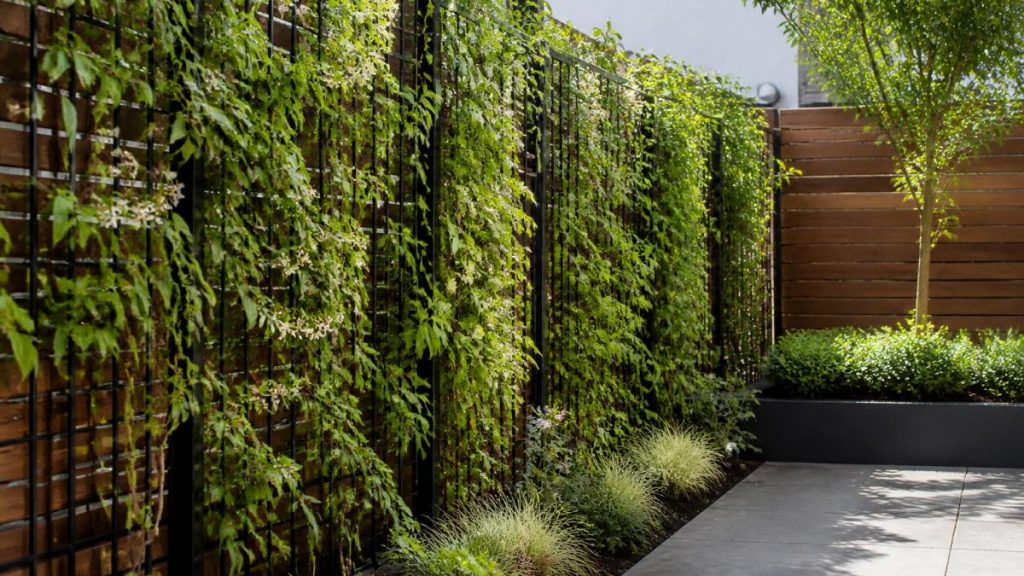
The best climbing plants for privacy trellises are vigorous, well-behaved climbers matched to your light levels and the upkeep you can offer. Ivy gives reliable evergreen cover, even in shade, while Russian vine and honeysuckle cover a boundary fast. Match the plant to the aspect first, then train it sideways for an even screen.
- Russian vine can cover a long fence within a couple of seasons but needs annual cutting.
- Ivy is the most reliable evergreen for shade and dense cover.
- Star jasmine needs a warm, sheltered wall to thrive.
- Fan stems sideways rather than upwards to fill the trellis evenly.
- Ivy and Russian vine need substantial supports such as metal mesh or wires.
Table of Contents
- Which Climbing Plants Work Best for Privacy Trellises?
- Fast-Growing Climbing Plants for Privacy
- Evergreen Climbing Plants for Trellis Coverage All Year
- Climbing Plants for Shade: What Grows Well Without Full Sun
- How to Train Climbing Plants on a Trellis
- Choosing the Right Trellis for Your Climbing Plants
- Planning Your Privacy Screen with TLC Gardening
- Frequently Asked Questions
Which Climbing Plants Work Best for Privacy Trellises?
The best climbing plants for privacy trellises are vigorous, well-behaved climbers that suit your light levels and how much upkeep you can offer. At TLC Gardening, we see the same pattern across Oxfordshire gardens: the plants that screen well are the ones matched to the wall, not the ones bought on impulse. This guide from TLC Gardening covers the strongest options for privacy trellises, from fast growers that cover a fence in a season or two to evergreens that hold their leaves through winter.
Privacy screening fails for one reason more often than any other: the wrong plant for the aspect. A sun-loving climber on a north-facing fence sulks and thins out, and a thug of a grower swallows the shed. Get the match right and a trellis becomes a living screen in two or three seasons.
Below, we break down the best climbing plants for privacy trellises by situation, then explain how to train and support them so the screen actually works.
| Plant | Growth speed | Evergreen? | Light needed | Best for |
|---|---|---|---|---|
| Russian vine | Very fast | No | Full sun to part shade | Quick cover, large boundaries |
| Honeysuckle | Fast | Mostly semi-evergreen | Sun to part shade | Fragrance, wildlife |
| Ivy | Moderate to fast | Yes | Shade to sun | Year-round dense cover |
| Clematis (montana types) | Fast | No | Sun to part shade | Spring flower, light screening |
| Climbing rose | Moderate | No | Full sun | Structure, long flowering |
| Star jasmine | Moderate | Yes (sheltered spots) | Sun, warm wall | Evergreen scent near seating |
Fast-Growing Climbing Plants for Privacy
Fast-growing climbing plants for privacy are the quickest route to a screened boundary, but speed comes with a warning. The fastest growers need the hardest pruning. Pick one only if you will actually cut it back.
Russian vine is the speed champion and the one we warn most clients about. It can cover a long fence within a couple of seasons, which is exactly why it is a handful to control. Use it where you need cover fast and can commit to annual cutting.
Honeysuckle grows briskly and brings scent and pollinators, which fits our pollinator-friendly approach. It is not fully evergreen, so expect thinner cover in midwinter.
Clematis montana romps away in spring and flowers heavily, then fades into a lighter screen for the rest of the year. It is fast, but it is a seasonal screen rather than a year-round one.
Watch out: fast growers left untrained will smother neighbouring plants and push under roof tiles. Tie them in early and cut hard once a year.
Evergreen Climbing Plants for Trellis Coverage All Year
Evergreen climbing plants for trellis coverage keep the screen working in winter, when deciduous climbers drop to bare stems. If year-round privacy is the goal, evergreen should be the backbone of the planting.
Ivy is the most reliable evergreen for shade and dense cover. It is unfussy about soil and light, and it knits into a solid green wall. The trade-off is weight and vigour, so keep it off gutters and window frames.
Star jasmine gives evergreen leaves and scent, but it wants a warm, sheltered wall to thrive. In a cold, exposed spot it will struggle.
Evergreen honeysuckle types hold more leaf than deciduous forms, though coverage still thins in a hard winter.
The practical rule: plant evergreens for the structure of the screen, then add flowering climbers for seasonal interest.
Climbing Plants for Shade: What Grows Well Without Full Sun
Climbing plants for shade are a small, valuable group, because most flowering climbers want sun. Shaded boundaries are where screening plans usually fall short.
Ivy is the standout shade-tolerant evergreen and will cover a north-facing fence where little else will.
Climbing hydrangea tolerates shade and offers white summer flowers, though it is slower to establish.
Some honeysuckles cope with part shade and still flower reasonably well.
The common mistake is buying a sun-lover for a shaded wall and hoping. It will grow thin and flower poorly. Match the plant to the light first, then choose.
RHS guide to climbing plants is a sound reference for checking a climber’s light and soil needs before you buy.
How to Train Climbing Plants on a Trellis
Training is what turns a climbing plant into a screen rather than a tangle. The method matters more than the plant for a tidy result.
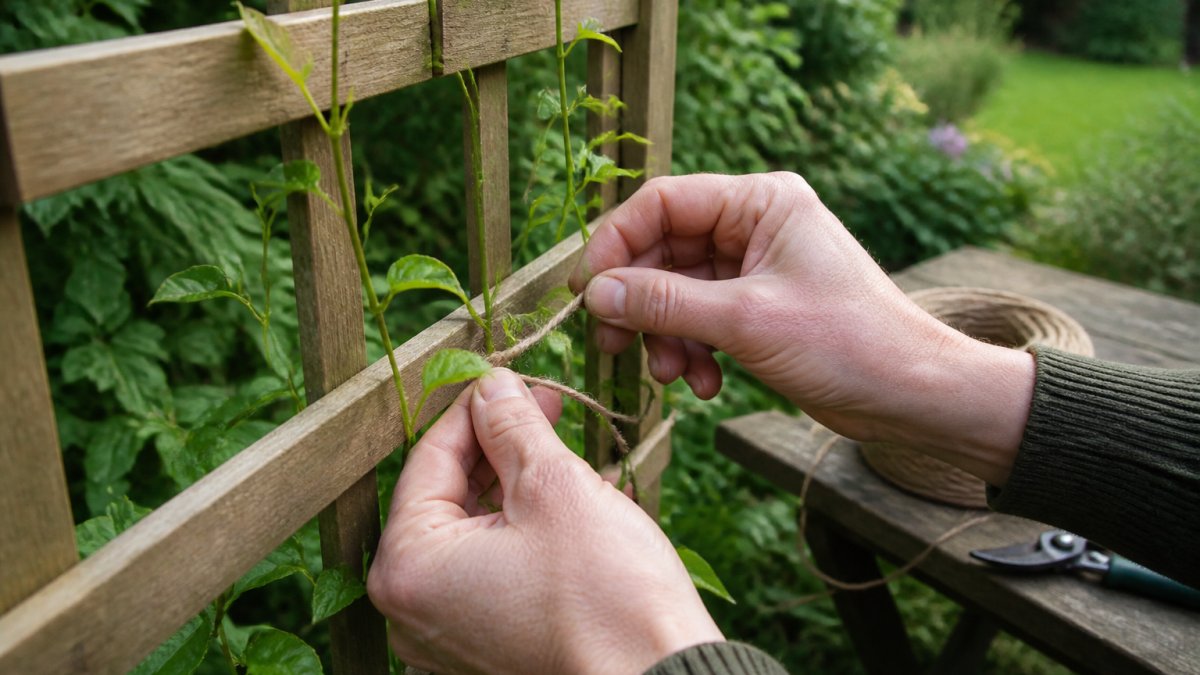
- Fix the trellis firmly with a gap from the wall for airflow.
- Plant slightly away from the base and lean the first shoots towards the support.
- Tie stems in loosely with soft twine, spreading them sideways rather than upwards.
- Pinch out the leading tips to encourage side growth and a denser screen.
- Re-tie and prune each year to keep the cover even.
Fanning stems outward, not just upward, is the trick most people miss. It fills the trellis evenly instead of leaving a bare patch at the bottom.
Choosing the Right Trellis for Your Climbing Plants
The right trellis depends on the plant’s weight and how it climbs. A flimsy support under a heavy climber is a false economy.
- Wooden trellis panels: good for light climbers and a traditional look, but check the fixings.
- Metal mesh or wires: strong and long-lasting, ideal for heavy evergreens and roses.
- Wall-mounted wires: discreet and effective for fan-trained climbers.
- Freestanding screens: useful for dividing a garden or screening a seating area.
Match the strength of the support to the vigour of the plant. Ivy and Russian vine need something substantial; clematis and jasmine are lighter. If you would rather not fit it yourself, our services for every garden include the practical groundwork.
Planning Your Privacy Screen with TLC Gardening
A privacy screen works best when the planting, the support, and the upkeep are planned together. That is where a little expert input saves a lot of trial and error.
At TLC Gardening, we are a family-run team caring for gardens across Oxford and Oxfordshire. We can advise on the right climbers for your light and soil, install and train them, and keep them trimmed so the screen stays neat rather than rampant. Our maintenance is timed with local wildlife in mind, and our pollinator-friendly planting means your screen can support bees and butterflies too. Regular slots or one-off visits are both available, so you are never left waiting.
If you are ready to plan a screen that looks good all year, let’s chat about what would suit your garden.
Frequently Asked Questions
What is the best climbing plant for privacy on a trellis?
There is no single best option because it depends on your site. For quick cover, fast growers like Russian vine or honeysuckle work well, while evergreens such as Trachelospermum jasminoides (star jasmine) keep their leaves through winter. For privacy trellises in shaded spots, ivy and climbing hydrangea cope with low light. Match the plant to your light levels, soil and how much pruning you can manage, rather than picking one universal winner.
Which climbing plants stay green all year?
Evergreen climbing plants for trellis screens include star jasmine, ivy, winter jasmine and evergreen honeysuckle. These keep foliage through winter, so your privacy screen does not thin out in the colder months. Ivy is the most shade-tolerant and vigorous of the group, while star jasmine needs a sheltered, sunny spot to thrive. Check hardiness before planting, as some evergreens struggle in exposed or frosty positions.
How do I train climbing plants to cover a trellis?
Fix the trellis securely first, leaving a small gap from the wall for air circulation. Plant slightly away from the base, then tie young shoots to the trellis with soft twine, spreading them evenly rather than letting them bunch. Pinch out growing tips to encourage side shoots, and re-tie regularly as stems thicken. Climbing plants with tendrils or aerial roots, such as ivy, need less tying, while roses and clematis benefit from regular guidance.
Can climbing plants damage a fence or wall?
Some can. Vigorous climbers with aerial roots, like ivy, can work into cracks and lift mortar over time, and heavy plants may pull on weak fences. Self-clinging types are best kept off damaged masonry, and free-standing trellises set slightly away from the wall reduce the risk. Check the structure before planting and choose lighter climbers for older fences. Pruning regularly keeps growth in check and limits pressure on the support.
Screening a boundary should not mean a season of guesswork and tangled stems. TLC Gardening can match the right climbers to your garden, train them properly, and keep them in shape with reliable, family-run care across Oxfordshire. Get a quote from TLC Gardening and turn a bare fence into a living screen that works all year.
