Table of Contents
- Why Pollinator Friendly Gardens Matter in 2026
- How Pollinator Friendly Gardens Support Local Biodiversity
- Can You Grow Wildflowers in Shade Conditions?
- Best Native Plants for Bees and Butterflies
- Pollinator Garden Maintenance Tips for a Tidy, Thriving Space
- Do Pollinator Gardens Need Less Maintenance Than a Lawn?
- Frequently Asked Questions
Last Updated: 22 September 2026
Why Pollinator Friendly Gardens Matter in 2026
Pollinator friendly gardens are planted and maintained spaces designed to feed, shelter and support bees, butterflies, moths and other pollinating insects. For anyone weighing up the benefits, the case is straightforward: a garden that works for pollinators also tends to work better for the people who own it. At TLC Gardening, we’ve watched this shift happen across Oxfordshire, where more homeowners now ask for planting that supports local wildlife without giving up a tidy, well-kept look. As a family-run business, we provide expert garden maintenance services, ensuring properties across Oxford and Oxfordshire remain pristine and vibrant. Our clients achieve consistently well-kept gardens, enhancing property aesthetics and supporting local wildlife through our pollinator-friendly and wildflower creation specialisms. We offer reliable, high-quality care, transforming garden upkeep from a chore into a seamless, professional service.
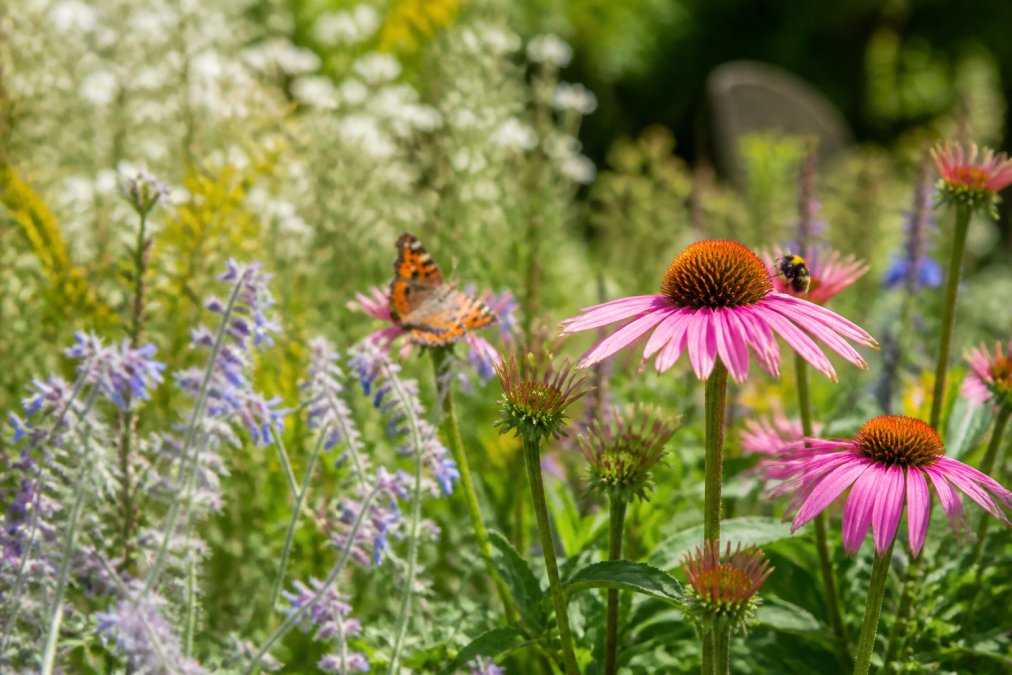
The most common misconception is that a pollinator garden means letting everything run wild. It doesn’t. A well-designed pollinator border is structured, seasonal and deliberately planted. It simply replaces sterile bedding with flowers that actually feed something.
The benefits stack up in three areas: ecology, cost and enjoyment. Below, we’ll break down each one and show how pollinator friendly gardens fit into a normal maintenance routine.
A pollinator garden is not an unmanaged garden. It is a planned garden where every plant earns its place by feeding wildlife, extending colour across the seasons, or both.
How Pollinator Friendly Gardens Support Local Biodiversity
Biodiversity in a garden means the range of living things it can support, from soil organisms to birds. Pollinator friendly gardens lift that range by providing continuous food through the growing season.
Wildlife organisations such as the Wildlife Trusts’ guidance on gardening for wildlife point out that even small urban and suburban plots act as stepping stones between larger habitats. A single garden rarely changes a landscape. A street of them does.
In practice, the gains show up in ways you can see:
- More bees and butterflies visiting from early spring to late autumn
- Better fruit set on apples, pears, courgettes and soft fruit
- More birds, because insects are food for chicks
- Healthier soil as planting density increases
The key is continuity. A garden that flowers hard for three weeks and then nothing for two months supports far less life than one with something in bloom from March to October. That’s a design decision, not an accident.
Can You Grow Wildflowers in Shade Conditions?
Yes, you can grow wildflowers in shade conditions, but the species list changes completely. Most wildflower meadow mixes sold for open ground will fail under a tree canopy or against a north-facing fence.
For shaded spots, look for woodland-edge and hedgerow species rather than meadow species. Good candidates include foxglove, wood anemone, red campion, hedge woundwort and wild strawberry. These evolved under dappled light and cope with drier soil beneath trees.
A few practical points matter more than the plant list:
- Dappled shade is far easier than deep, dry shade
- Autumn planting gives roots time to establish before summer drought
- Leave leaf litter in place; it feeds the soil and shelters overwintering insects
- Avoid digging over the area each spring, which disturbs the root network
If your shaded border is bare and compacted, the honest answer is that it needs improving before any wildflower will thrive. That usually means a season of mulching and weed suppression first.
Best Native Plants for Bees and Butterflies
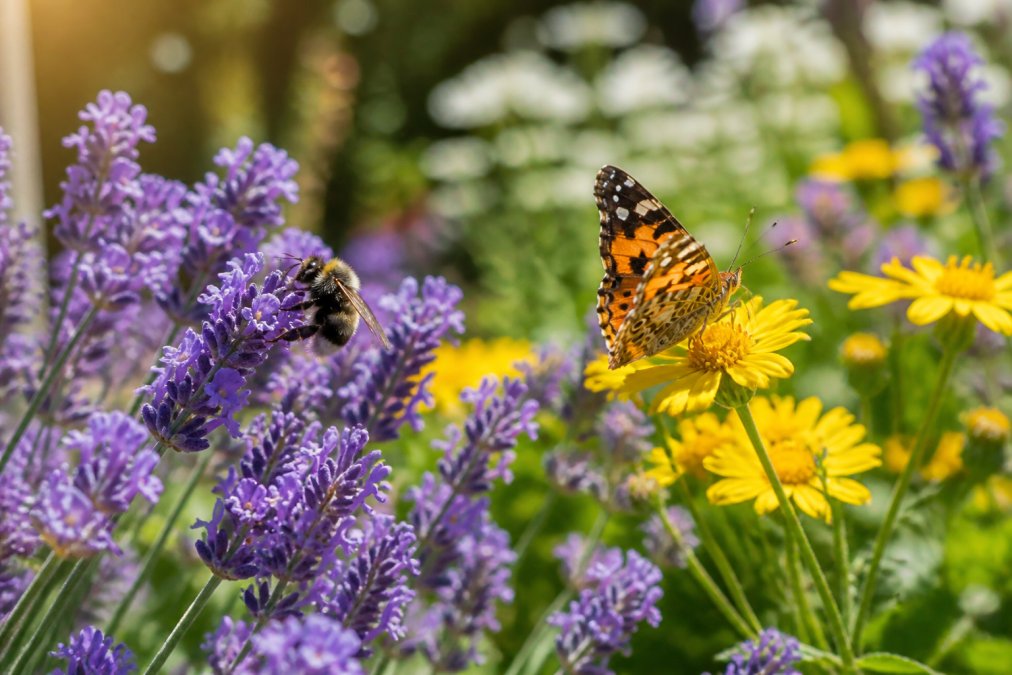
The best native plants for bees and butterflies are those with open, single flowers that give insects easy access to pollen and nectar. Double-flowered cultivars often look impressive but offer almost nothing.
Reliable performers for a mixed border include:
| Plant | Best For | Season | Notes |
|---|---|---|---|
| Lavender | Bees | Summer | Needs full sun and sharp drainage |
| Foxglove | Bumblebees | Early summer | Tolerates shade; biennial |
| Ox-eye daisy | Bees, hoverflies | Late spring | Ideal for meadow strips |
| Purple loosestrife | Butterflies | Mid to late summer | Suits damp ground |
| Common knapweed | Butterflies, bees | Summer | Long flowering, tough |
| Honeysuckle | Moths, bees | Summer evenings | Climber for fences |
The Royal Horticultural Society’s plant selector for pollinators is a useful reference when checking whether a specific variety earns its space. Choose a spread of flowering times rather than a single showstopper month.
Plant in drifts of three to five of the same species rather than one of everything. Pollinators forage more efficiently when they can work a single patch, and drifts read as deliberate design rather than a random collection.
Pollinator Garden Maintenance Tips for a Tidy, Thriving Space
Pollinator garden maintenance tips come down to timing. The single biggest mistake is cutting everything back in autumn because it looks untidy.
Here’s a workable seasonal routine:
- Spring: leave stems standing until late April, then cut back and compost
- Early summer: deadhead spent flowers to encourage a second flush
- Late summer: resist the urge to tidy; seed heads feed birds and insects
- Autumn: leave hollow stems and seed heads in place over winter
- Winter: mulch bare ground, avoid disturbing the soil structure
The result can still look sharp. Edging, path maintenance and clear structure do the visual work, while the planting itself stays wildlife-friendly.
Cutting all herbaceous growth to the ground in October removes overwintering habitat for insects and leaves the border bare until May. Stagger the cut instead, taking half in late winter and half in early spring.
Do Pollinator Gardens Need Less Maintenance Than a Lawn?
A pollinator border needs less ongoing work than a lawn, but it needs different work. There is no weekly mowing, no edging, no feeding regime to keep it green. In its place you get seasonal cutting, occasional division and selective weeding.
Lawns demand frequent, repetitive effort across the whole growing season. A pollinator border concentrates effort into a few points in the year. For busy households, that pattern is usually easier to live with.
What most guides miss is that a pollinator garden rewards a little expertise at the start. Getting the planting right in year one saves years of patching and replanting. This is where professional help pays for itself: choosing the right species for your soil, light and drainage, then maintaining it on a schedule that respects the wildlife it supports. Our clients achieve consistently well-kept gardens, enhancing property aesthetics and supporting local wildlife through our pollinator-friendly and wildflower creation specialisms. We offer reliable, high-quality care, transforming garden upkeep from a chore into a seamless, professional service.
That’s the work TLC Gardening does across Oxford and Oxfordshire. As a family-run business, we specialise in pollinator planting and wildflower creation, and we time our visits around local wildlife so the garden stays both neat and alive. Regular slots or one-off visits are available, and you won’t be waiting weeks for a slot. We pride ourselves on great reviews.
The real challenge with pollinator friendly gardens isn’t enthusiasm, it’s consistency. A garden that supports bees and butterflies needs the right plants, the right cut-back timing and a maintenance schedule that doesn’t undo the habitat you’ve built. TLC Gardening handles all three: expert advice on planting for your specific soil and light, maintenance timed with local wildlife in mind, and reliable visits from a family-run team that knows Oxfordshire gardens. Get a quote from TLC Gardening and turn your outdoor space into one that looks after itself and everything living in it. We pride ourselves on great reviews.
Frequently Asked Questions
What are the main benefits of a pollinator friendly garden?
A pollinator friendly garden supports bees, butterflies and other insects while improving how your outdoor space looks and functions. Native wildflowers and flowering shrubs provide food and shelter, which helps local biodiversity recover. These gardens often need less watering and fewer chemical inputs than a traditional lawn, and they add seasonal colour that changes from spring through autumn. Many people also find them more interesting to sit in and easier to maintain once established.
Can you grow wildflowers in shade conditions for pollinators?
Yes, though the choice of species matters. Full shade limits flowering, so aim for dappled or partial shade where possible. Woodland and hedgerow plants such as foxgloves, wood anemone, red campion and hedge woundwort cope well with lower light and still attract bees and butterflies. Avoid sun-loving meadow mixes in deep shade, as they will grow leggy and flower poorly. A maintenance visit can help you assess light levels before you sow.
What are the best native plants for UK pollinators?
Good choices include lavender, borage, comfrey, foxgloves, ox-eye daisy, field scabious, purple loosestrife and viper’s bugloss. For shrubs, try hawthorn, blackthorn and buddleia, though buddleia needs managing to stop it spreading. A mix of early, mid and late-season flowers keeps food available from March to October. Grouping the same plant in blocks of three or more makes it easier for bees to find and use them efficiently.
Do pollinator gardens require less maintenance than traditional lawns?
Once established, a pollinator border usually needs less mowing, watering and feeding than a lawn. The trade-off is timing: wildflower areas are cut once or twice a year, typically in late summer or early spring, and dead growth is left over winter for insects to shelter in. Weeding is still needed in the first year while plants settle. After that, a pollinator garden maintenance visit every few weeks keeps edges neat without stripping out the habitat.